




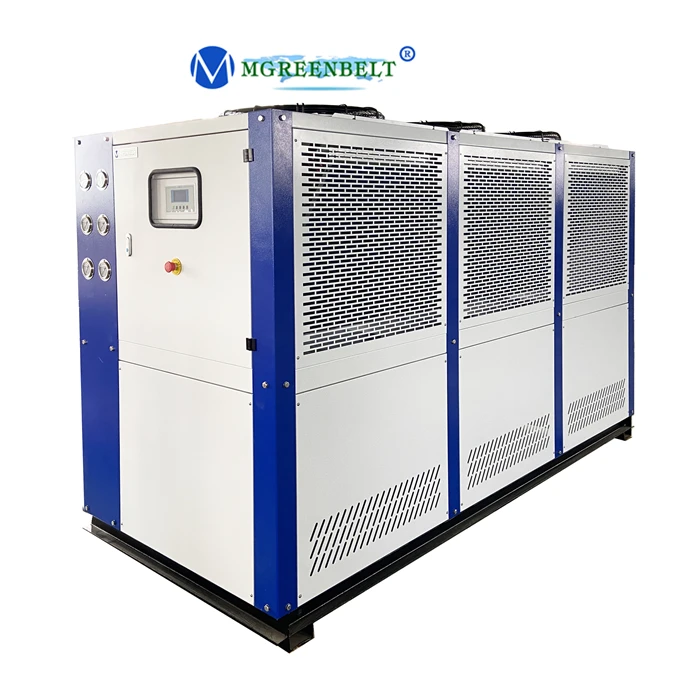

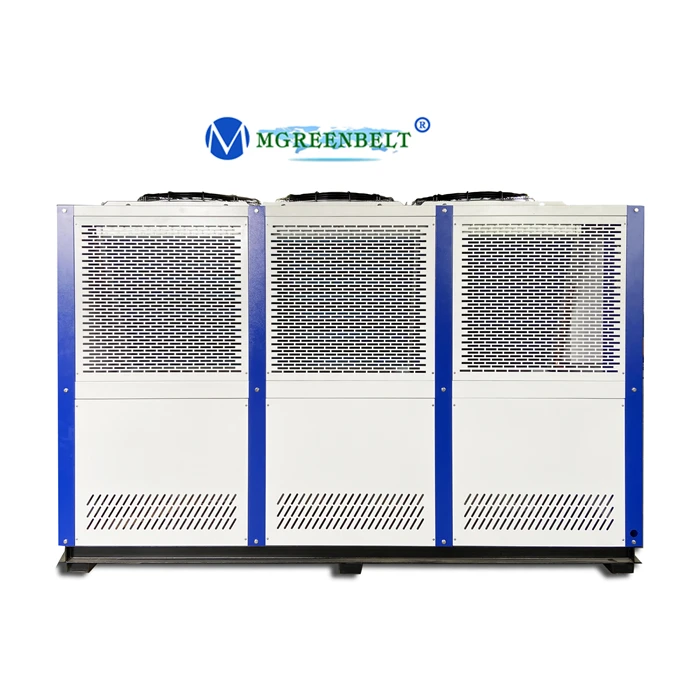
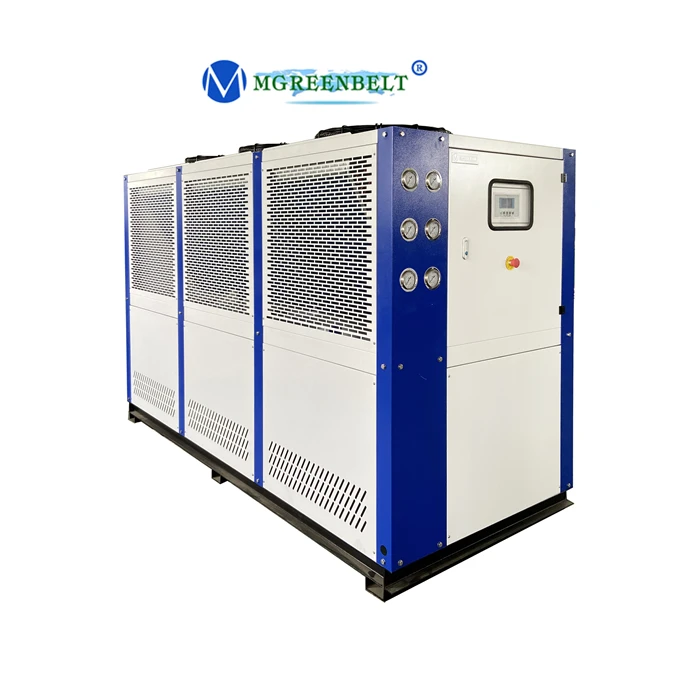
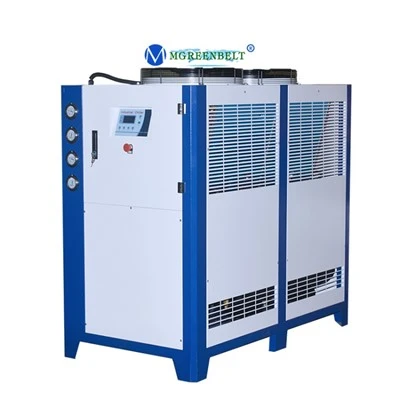
Portable Compact Out Door Modular Air Cooled Scroll Storage Water Tank Water Chiller Manufacturer
Portable Compact Out Door Modular Air Cooled Scroll Storage Water Tank Water Chiller Manufacturer
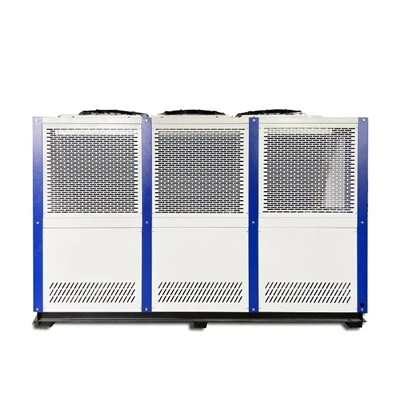
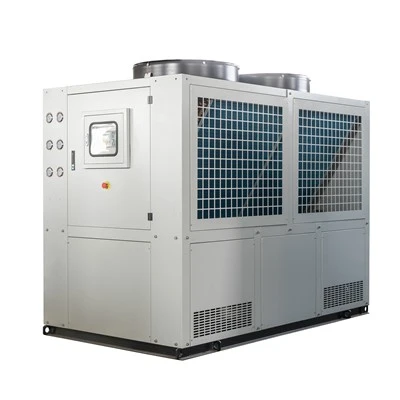
A water chiller is a cooling system that uses a refrigerant to remove heat from water, producing chilled water for various applications. It operates on the vapor-compression refrigeration cycle, involving four main stages: compression, condensation, expansion, and evaporation.
Application
1. Manufacturing Industry
Plastic Processing: Used in injection molding, extrusion, and blow molding to cool molds and prevent material deformation, ensuring product quality and dimensional accuracy.
Metal Fabrication: Cools machining tools (e.g., CNC machines) and industrial furnaces to reduce thermal stress and extend equipment lifespan.
Food & Beverage Production: Maintains low temperatures for food processing lines, refrigeration systems, and beverage brewing to preserve product freshness and safety.
2. Healthcare & Pharmaceutical Sector
Hospitals & Laboratories: Cools medical equipment (e.g., MRI machines, laser devices) and maintains stable temperatures in cleanrooms for research and drug development.
Pharmaceutical Manufacturing: Controls cooling processes in chemical synthesis, pharmaceutical formulation, and storage of temperature-sensitive drugs.
3. HVAC (Heating, Ventilation, and Air Conditioning)
Commercial Buildings: Provides central cooling for large offices, malls, and hotels by circulating chilled water through air handling units (AHUs) to maintain comfortable indoor environments.
Data Centers: Cools server rooms and IT infrastructure to prevent overheating and ensure stable operation of critical systems.
4. Chemical & Petrochemical Industry
Process Cooling: Controls reactions in chemical plants by cooling reactors, distillation columns, and heat exchangers to maintain optimal process conditions.
Refineries: Cools equipment used in oil refining and gas processing to manage high-temperature operations and prevent equipment failure.
5. Aerospace & Automotive
Aerospace Manufacturing: Cools testing facilities for aircraft components and supports temperature-controlled environments in engine production.
Automotive Industry: Used in vehicle component testing (e.g., engine cooling systems) and manufacturing processes like paint drying and assembly line equipment cooling.
6. Textile & Paper Industry
Textile Production: Cools spinning machines and dyeing equipment to maintain fiber quality and prevent material damage during processing.
Paper Mills: Controls roll temperatures in paper manufacturing to ensure uniform thickness and quality of paper products.
7. Renewable Energy Sector
Solar & Wind Energy: Cools power generation equipment and energy storage systems (e.g., batteries) to optimize efficiency and longevity.
8. Research & Development
Scientific Laboratories: Supports low-temperature experiments, cryogenic research, and climate control in testing chambers for material science and engineering.
Difference of Air Cooled and Water Cooled Water Chiller
The differences between air-cooled and water-cooled chillers mainly lie in cooling methods, structural designs, energy efficiency, and application scenarios. Here's a detailed comparison in English:
1. Cooling Medium and Heat Dissipation
Air-cooled Chillers
They use ambient air as the cooling medium. Heat from the condenser is dissipated through fans that force air across finned coils. This design eliminates the need for a separate water circuit or cooling tower, making it a self-contained system.
Water-cooled Chillers
These rely on water (often from a cooling tower or external water source) to absorb heat from the condenser. The water circulates through a heat exchanger, and the absorbed heat is released to the atmosphere via the cooling tower.
2. System Structure and Components
Air-cooled Chillers
Feature a simpler structure with fin-and-tube condensers and fans.
Require no additional auxiliary equipment like cooling towers, pumps, or water treatment systems, making them more compact.
Water-cooled Chillers
Use shell-and-tube or plate-type condensers for heat exchange.
Need a complex auxiliary system including a cooling tower, circulation pumps, and water treatment devices to prevent scaling and corrosion.
3. Energy Efficiency and Performance
Energy Efficiency Ratio (COP)
Air-cooled chillers typically have a COP of 3.0–4.0. Their efficiency is affected by ambient temperature (e.g., reduced performance in hot summers).
Water-cooled chillers offer a higher COP (4.0–5.0) due to water's superior heat transfer capability, providing more stable cooling even in high-temperature environments.
Operating Costs
Air-cooled systems consume more electricity for fan operation.
Water-cooled systems have lower power costs but incur energy use from cooling towers and pumps, along with potential water treatment expenses.
4. Installation and Maintenance
Installation
Air-cooled chillers are easy to install, as they can be placed outdoors (e.g., on rooftops) without complex water piping.
Water-cooled chillers require extensive installation work, including setting up cooling towers, water pipes, and pumps, leading to higher construction costs.
Maintenance
Air-cooled units need regular cleaning of fins and fans to remove dust and debris.
Water-cooled systems demand more intensive maintenance, such as cleaning condensers to prevent scaling and inspecting cooling tower water quality to avoid algae and corrosion.
5. Application Scenarios
Air-cooled Chillers Are Suitable for:
Small to medium-scale systems (e.g., commercial building HVAC, small industrial equipment, laboratory instruments).
Areas with water scarcity or high water costs, as they don't require a continuous water supply.
Mobile or temporary setups due to their compact design.
Water-cooled Chillers Are Ideal for:
Large industrial applications (e.g., chemical plants, data centers, pharmaceutical facilities) that require high-load, continuous cooling.
Hot and humid environments where air-cooled systems might struggle.
Scenarios where waste heat recovery is needed , enhancing energy efficiency.
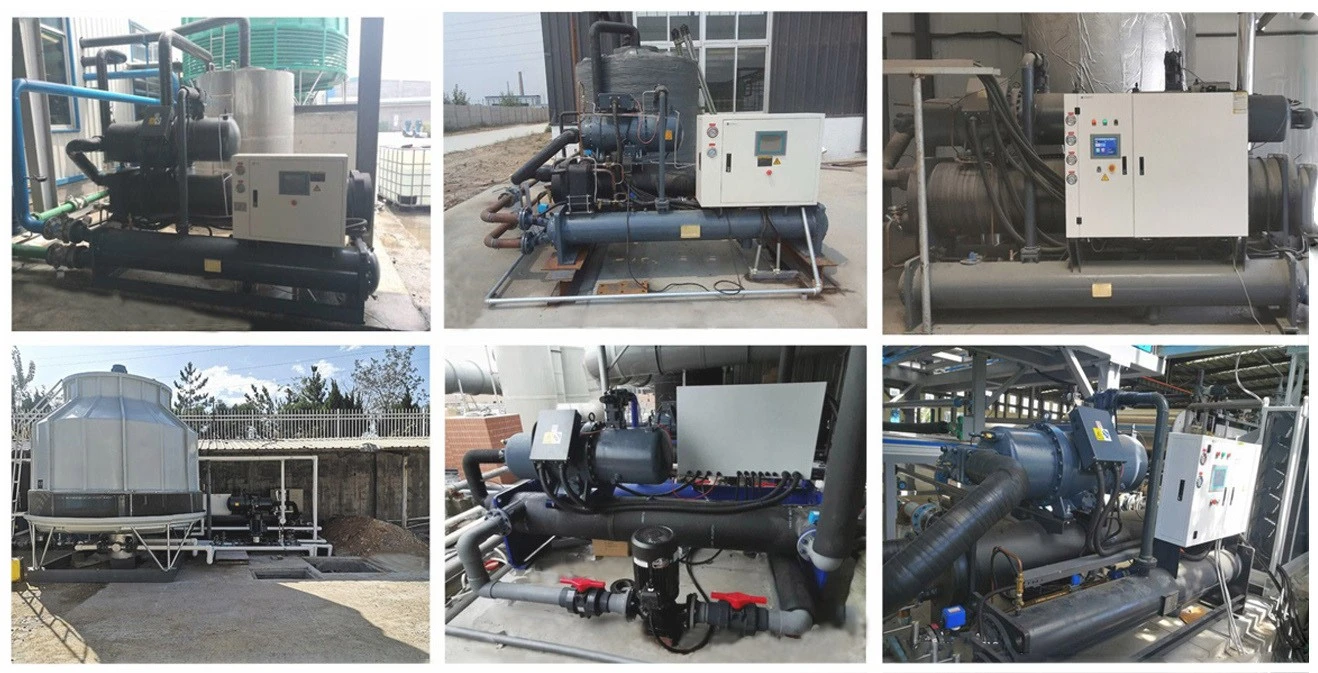
Case Show
Company Profile
Jinan ZS times technology Co.,Ltd. and Jinan Mgreenbelt Machinery Co., Ltd. are core enterprises of MGREENBELT compressed air system products and services chain. Specializing in technical research, sales, maintenance, and after-sales service of Industrial Refrigeration and Air Compressor Systems. We provide MGREENBELT Industrial Chillers, Cold Storage Rooms, Cold Storage Panels, and are also a professional supplier of Air Compressor accessories Provide AE, MGREENBELT brand imported Air Compressor accessories and consumables series products
We are always at your service when you need
We're always here to assist whenever you need us-whether for technical queries, solution recommendations, or support. Just let us know how we can help, and we'll strive to provide prompt, reliable assistance tailored to your needs.
active members
years experience
events & challenges
expert instructors
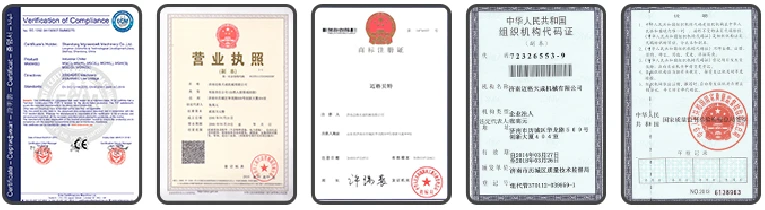
Certificate of Water Chiller
Hot Tags: portable compact out door modular air cooled scroll storage water tank water chiller manufacturer, China portable compact out door modular air cooled scroll storage water tank water chiller manufacturer suppliers, factory, industrial chiller commercial use, industrial chiller exporter, industrial chiller features, industrial chiller manufacturing industry, industrial chiller pharmaceutical industry
You Might Also Like


Send Inquiry