




Cold Rooms
What Is Cold Rooms?
Cold Rooms, also referred to as Catinas or Root Cellars, are a room, located in the basement or under the front porch, that as the name suggests, has a lower temperature than the rest of the house. These rooms are typically used to store wine, potatoes, flower bulbs, and other items that need a cold, damp space to thrive. This is not only a good space to house these items, but it is much cheaper than running a fridge!
Advantages of Cold Rooms
Large storage capacity
One of the critical benefits of cold rooms is that they provide ample storage space for various products. This large capacity storage makes them perfect for restaurants and other businesses with extensive inventories or orders. Cold rooms are not only ideal for trays or boxes of smaller items but also allow for bulkier items to be stored in the same place.
Easy organisation
Cold rooms also promote organised storage and easy access to your products when needed. Shelving systems can be tailored to suit individual needs, so you can keep your inventory well organised, easy to find and operate a critical fifo (first in first out) system of stock rotation.
Off-the-shelf standard sizes
Cold rooms come in both standard, or 'off the shelf' sizes and bespoke set-ups. With the standard modular cold rooms, you can purchase one from a catalogue of sizes and install it without any additional work required. Meanwhile, custom built bespoke cold rooms and freezer rooms can be designed to fit your exact requirements for maximum storage capacity and convenience. If you need an unusual size or layout, that's no problem. With a site survey and a little project management the exact walk-in cold room and freezer room that your business needs can be created.
Combines smaller refrigeration
Having multiple refrigerated units in an industrial kitchen can give you the level of storage you require but can also take up valuable floor area. By opting for cold room storage, you'll have everything combined into one large store freeing up much-needed space in other areas of your kitchen or business premises.
Temperature maintenance
Cold rooms and freezer rooms provide consistent temperatures that you can set according to specific requirements. Consistent temperatures ensure that the goods stored inside retain the quality that was present at the point at which they were purchased. Should a power cut occur, cold rooms can also help to protect against spoilage and waste, as the large, insulated room can remain colder for extended periods at lower temperatures.
Customisable
You can have your chiller room customised to your individual needs and specifications. From insulated doors and internal lights to shelves and multiple doors, you can design the cold room exactly how you want it for maximum efficiency and convenience.
Energy-efficient refrigeration
Insulation is vital when looking at cold storage solutions, especially if you want an energy-efficient option. Cold rooms are insulated with high-quality materials, making them energy efficient and ensuring cold air remains in the cold room for longer. Proper insulation helps keep running costs low while still maintaining optimal storage temperatures. Freezer rooms are supplied with a floor as standard to help maintain low temperatures and improve efficiency.
Integrated and remote refrigeration
Finally, depending on your needs and budget, cold rooms can come with integrated or remote refrigeration systems. The integrated cold room system is usually more cost-effective as the refrigeration system is built into the cold room and requires less maintenance. On the other hand, a remote cold room or remote freezer room is slightly more energy-efficient but has higher upfront costs due to its complexity. Read more about remote vs integral refrigeration.

Why Choose Us
Best after-sales service
We have a large number of professional after-sales service teams. Should you have any inquiries after receiving your shipment, feel free to reach out to us anytime.
Rich experience
We have 17 years of manufacturing experience and have provided professional solutions to many customers.
Oem & odm capabilities
We offer customized services, tailoring products to your specific requirements.
Real factory
Our company has more than 5,000 square meters of production plants and more than 200 employees engaged in product production, research and development and after-sales service
Types of Cold Rooms
Storage cold rooms or positive temperature cold rooms
Are designed for the conservation of products between 0 and 10 ºc. They are mainly used for the preservation of fresh food, beverages or medicines.
Freezing cold rooms or negative temperature cold rooms are
Used to keep frozen products between 0 and -28ºc. They usually have better insulation and fewer daily openings. Frozen food, vaccines, or organic material are kept at these temperatures.
Deep freezing tunnel
In this type of freezing cold room, which reaches -30 ºc to -40 ºc. It freezes the product individually by means of automatic displacement systems and cold currents while the product moves around inside the chamber. They are mainly used in the food industry for the freezing of meat trays or sweets.
Temperature blast chillers
In this type of cold room, the aim is to quickly reduce the temperature of the product to reduce the risk of contamination and to be able to preserve them for longer without losing their properties. This type of cold room is commonly used in the preparation of food in industrial kitchens.
When selecting cold storage solutions, it's crucial to differentiate between cold rooms and walk-in freezers to match the right option with the intended application.
Temperature range
Cold rooms generally operate just above 0°c and are primarily used to prevent spoilage of perishable items such as produce or dairy. Walk-in freezers, on the other hand, sustain much lower temperatures, typically between -18°c to -22°c, creating an environment suitable for long-term preservation of items like meats and frozen foods.
Insulation and refrigeration
Both cold rooms and walk-in freezers require effective insulation to maintain constant temperatures. However, walk-in freezers necessitate higher-grade insulation and more powerful refrigeration systems due to their colder operational temperatures.
Size and customisation
Cold rooms can often be customized in size and shape to suit the needs of a business. Walk-in freezers are also adaptable but may have more stringent structural requirements due to the need for thicker insulation and more robust cooling equipment.
Energy consumption: Walk-in freezers usually consume more energy than cold rooms because of their lower temperature requirements. This aspect should be taken into account when considering the ongoing operational costs.
Usage applications
Cold rooms are ideal for supermarkets, catering businesses, and hospitals where frequent access to chilled, but not frozen, products is necessary. Walk-in freezers are more common in settings that require bulk storage of frozen products, such as food processing plants and large-scale catering facilities.
Selecting between a cold room and a walk-in freezer hinges on understanding these differences to ensure that the chosen cold storage solution optimally aligns with the specific needs of the business regarding product type, storage size, temperature requirements, energy efficiency, and budget considerations.
Before purchasing a cold room, there are a few key factors you'll need to be aware of:
Your cold room can either be used as a walk in fridge or walk in freezer, and some models can be used as both. You'll need to decide what you need for your business.
Your stock will be placed on shelving (also called racking), which ensures ingredients are easily accessible and the storage space is maximised. You can normally configure this however you like, so the shelving is often sold separately. As a cold room is a harsh environment, food acids, moisture and general usage can cause shelving to rust or break. It's important you choose an option that is made from PVC or anodised aliminium which are resistant and strong.
You'll need to know the ambient temperature around the walk in. The highest ambient temperature is the highest temperature the cold room can operate in before the internal temperature is affected. Most cold rooms operate in temperatures up to 32°C, but if you require a higher ambient temperature more powerful options are available.
You should consider ventilation, as cold rooms require a large amount around the unit so heat can be transferred to the outside. If your cold room is going to be installed indoors, you should consider what else is in the room and if it could affect performance. It shouldn't be positioned in a confined area as it may not have enough ventilation to hold the correct temperature.
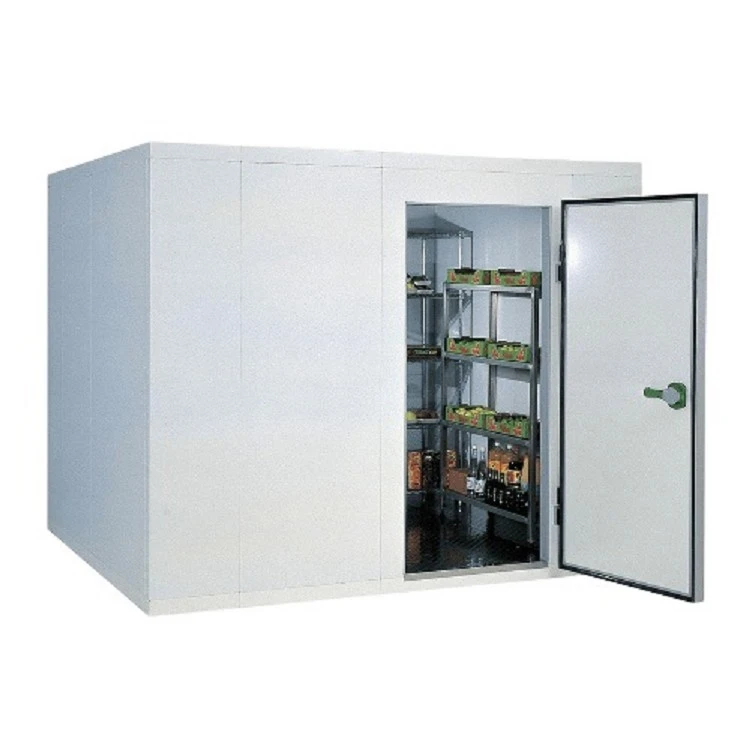
Components of Cold Rooms
Flooring
The temperature of a cold room determines whether it requires special flooring or can be installed on the base interior floor. The key to choosing a flooring is whether it can withstand freezing temperatures, whether it can be cleaned, whether it can carry heavy equipment, whether it is slip-resistant, rust-proof, and does not absorb water. Polyaspartic and polyurethane coatings cure quickly at low temperatures. Cold rooms connected to clean rooms must be seamless and tightly sealed, which requires flooring that can resist thermal shock.
Panels
The types of cold room panels vary greatly depending on the temperature rating of the cold room. An important aspect of cold room panels is that they prevent leaks and seal tightly regardless of temperature levels to prevent energy loss. Cold room panels form the walls and ceiling of the cold room and ensure temperature control. They help insulate and seal the cold room, just like the panels of the clean room.
Doors
In addition to the number of cold room doors, the quality of the doors is also important, as the doors are used to enter the cold room and keep the cold room sealed. As with the type of cold room, a key factor in choosing doors is the available space and whether transportation equipment needs to enter the cold room, such as pallet trucks and forklifts. Vertical doors are used in locations with narrow widths and ample overhead space. The main features of cold room doors are tightness, insulation, long-term use, high temperature resistance of the opener, and no hardening or sticking.
Cold room refrigeration system
The temperature of the cold room is achieved by using a refrigeration system that can meet the requirements and design of the cold room. The components of the refrigeration system include the compressor, condenser, expansion valve, evaporator coil, and circulating fan. The necessary component of the refrigeration system is the refrigerant gas, which can be ammonia, Freon, or carbon dioxide.
Compressor
The type of cold room compressor depends on the size of the cold room and its required temperature. Reciprocating compressors use pistons to produce positive displacement to move the refrigerant gas at high pressure. They are used in cold rooms with smaller capacities.
Condenser
The condenser is a heat exchanger where the heat of the refrigerant is transferred to a stream of water that flows to a cooling tower. In the condenser, the refrigerant is at a constant pressure and is controlled and monitored. The hot gas of the refrigerant is cooled to a liquid.
Expansion valve
In the expansion valve, the refrigerant expands, releases pressure, and experiences a drop in temperature. The refrigerant leaves the expansion valve as a liquid-vapor mixture. The expansion valve maintains the pressure differential and controls the amount of refrigerant entering the evaporator.
Evaporator
In the evaporator, the refrigerant is at a lower temperature, evaporates, and absorbs heat. From the evaporator, the refrigerant enters the compressor and the process begins again.
Cooling fans
Cooling fans circulate the low-temperature refrigerant from the evaporator to the cold room to help maintain the set temperature of the cold room. They ensure that the cold air is evenly distributed and reduce any temperature variations.
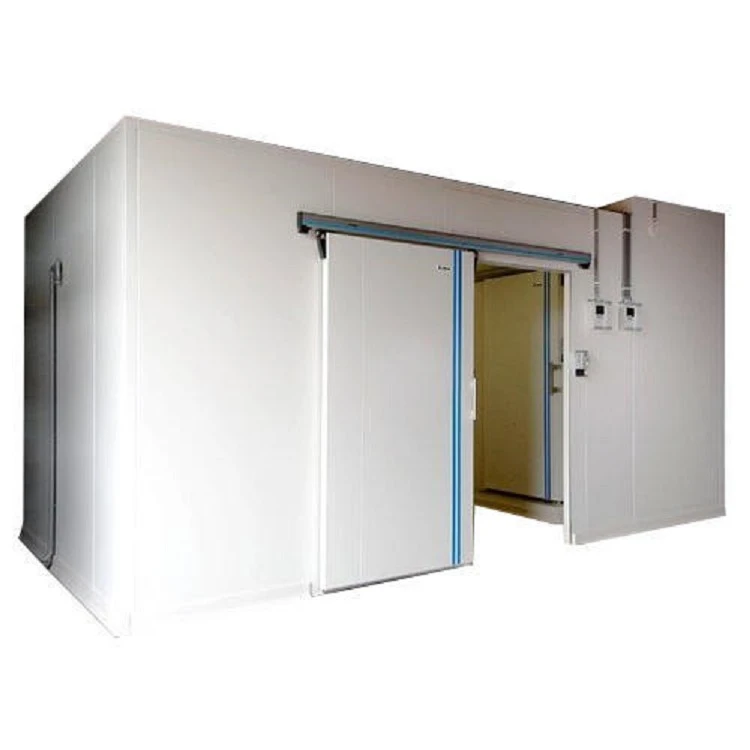
A cold room's design isn't that much different from any other refrigeration system. It's basically a giant, more powerful fridge, and works in a similar way using a compressor, a condenser, fans, and an evaporator that all maintain the temperature within the unit. Once a gas refrigerant is compressed by the compressor, it expands, allowing the gas to absorb energy in the form of heat. The hot gas then flows from the compressor and passes over the evaporator coils, and after being liquefied under high pressure, it cools these evaporator coils and the air surrounding them. This whole system coupled with proper insulation thus ensures a contained and controlled temperature throughout the room.
How to Install The Cold Rooms
Preparation for installation
Plan the installation site and prepare all necessary materials, such as cold room panels, doors, refrigeration units, evaporators, and corresponding accessories.
Assembling the shell
Assemble the insulated walls and roof of the cold room. Ensure the flooring is slip-resistant and that all joints are tightly connected. Install the cold room door and use a high-durability sealant at all joints to ensure proper sealing.
Refrigeration equipment installation
The installation of refrigeration equipment is particularly crucial. Confirm the installation positions of the outdoor compressor and condenser, and the indoor evaporator, then secure them in place. Install shock-absorbing pads under the compressor to ensure sufficient space for maintenance. Keep the area around the equipment unobstructed to ensure smooth air circulation.
Piping installation
Connect the copper pipes according to the fixed position of the refrigeration equipment. Weld the joints and promptly clean any internal oxides to prevent clogging the compressor. To prevent cold leaks in outdoor conditions, wrap the copper pipes with 2cm thick insulation to reduce energy loss.
Electrical and temperature control system installation
Connect all refrigeration equipment to the electrical control system, lay electrical conduits, and secure them with clamps. Connect the internal led light switches to the control box. Install the temperature sensor in the center of the cold room for accurate temperature readings throughout the unit. Label all connection points for easy maintenance and inspection.
Adjustment, testing, and operation
Finally, continuously test and adjust the installed cold room to ensure that all parameters meet the design requirements.
Company Introduction


Jinan ZS Times Technology Co.,Ltd. and Jinan Mgreenbelt Machinery Co., Ltd. are core enterprises of MGREENBELT compressed air system products and services chain. Specializing in technical research, sales, maintenance, and after-sales service of Industrial Refrigeration and Air Compressor Systems.
We provide MGREENBELT Industrial Chillers, Cold Storage Rooms, Cold Storage Panels, and are also a professional supplier of Air Compressor accessories Provide AE, MGREENBELT brand imported Air Compressor accessories and consumables series products.