

Water Cooeld Screw Chiller
Why Choose Us?
Best After-Sales Service
We have a large number of professional after-sales service teams. Should you have any inquiries after receiving your shipment, feel free to reach out to us anytime.
Real Factory
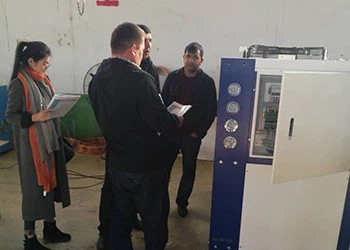
Our company has more than 5,000 square meters of production plants and more than 200 employees engaged in product production, research and development and after-sales service
Rich Experience
We have 17 years of manufacturing experience and have provided professional solutions to many customers.
OEM & ODM Capabilities
We offer customized services, tailoring products to your specific requirements.
What is Water Cooeld Screw Chiller?
A water-cooled screw chiller is a type of chiller system that uses recirculating water from a cooling tower in order to facilitate heat exchange. Once the water is processed from a source, it goes through the condenser and cooling tower before it is emitted as cool air into the room or building.


Energy Efficiency
These chillers are highly energy-efficient, particularly in large-scale cooling systems, where they outperform air-cooled alternatives. The use of water for heat transfer allows for efficient cooling even in high-temperature environments.
Precise Temperature Control
Water-cooled screw chillers provide precise temperature control, making them suitable for critical applications such as data centers, manufacturing processes, and medical facilities.
Low Noise Levels
Compared to air-cooled chillers, water-cooled screw chillers tend to produce less noise, making them suitable for applications where noise is a concern.
Space Efficiency
They typically have a smaller footprint than equivalent air-cooled systems, making them ideal for installations with limited space.
Longevity
Properly maintained water cooled screw chiller can have a longer operational lifespan compared to some other cooling systems.
Application of Water Cooeld Screw Chiller
Water-cooled screw chillers find use in a wide range of applications across various industries, including:
Industrial Processes
They are employed in manufacturing processes where precise temperature control is critical, such as in the pharmaceutical, chemical, and food processing industries.
Commercial Buildings
Water-cooled screw chillers are used in large commercial buildings, such as shopping malls, hotels, and office complexes, to provide air conditioning and maintain comfortable indoor environments.
Data Centers
These chillers are essential for cooling data centers, where maintaining optimal operating temperatures is crucial for the reliable performance of servers and networking equipment.
Hospitals
Water-cooled screw chillers are used in hospitals for air conditioning, refrigeration of medicines, and maintaining a controlled environment in operating rooms.
Manufacturing Facilities
They play a vital role in maintaining consistent temperatures in manufacturing facilities, ensuring product quality and production efficiency.
HVAC Systems
In large HVAC systems, water-cooled screw chillers help in cooling the air that is distributed throughout buildings, contributing to energy efficiency and occupant comfort.
Key Components of a Water Cooled Screw Chiller
A water-cooled screw chiller comprises several key components, each playing a critical role in its operation. Let’s break down these components and their functions:
Compressor
The heart of the chiller, the compressor, is responsible for compressing the refrigerant gas. In a water-cooled screw chiller, a twin-screw compressor is commonly used. It functions by squeezing the refrigerant gas, increasing its temperature and pressure.
Condenser
The high-pressure, high-temperature refrigerant gas leaves the compressor and enters the condenser. In a water-cooled chiller, this component typically consists of a shell-and-tube heat exchanger. Here, the refrigerant releases its heat to the water, causing it to condense into a high-pressure liquid.
Evaporator
After exiting the condenser, the high-pressure liquid refrigerant enters the evaporator, another heat exchanger. In this component, it absorbs heat from the chilled water or process fluid, causing it to evaporate and return to a low-pressure gas state.
Expansion Valve
The expansion valve controls the flow of refrigerant into the evaporator. It reduces the pressure and temperature of the refrigerant, preparing it for the evaporation process.
Chilled Water Loop
This is the system responsible for circulating the chilled water or process fluid to the areas or equipment that require cooling. It typically consists of pumps, pipes, and heat exchangers.
Condenser Water Loop
This loop facilitates the exchange of heat between the refrigerant and the cooling water. It includes pumps, pipes, and cooling towers or water-cooled condensers.

Operational Principles of a Water Cooled Screw Chiller
Compression
The process begins when the twin-screw compressor draws in low-pressure refrigerant gas from the evaporator. As the screws rotate, they compress the gas, significantly increasing its pressure and temperature.
Heat Rejection
The high-pressure, high-temperature refrigerant gas exits the compressor and enters the condenser. Here, it releases heat to the condenser water, causing the refrigerant to condense into a high-pressure liquid.
Expansion and Evaporation
The high-pressure liquid refrigerant then passes through an expansion valve, where it undergoes a rapid expansion, lowering its pressure and temperature. This low-pressure, low-temperature refrigerant is then sent to the evaporator, where it absorbs heat from the chilled water or process fluid, causing it to evaporate into a low-pressure gas.
Heat Absorption
As the refrigerant absorbs heat in the evaporator, the temperature of the chilled water or process fluid decreases. This chilled fluid is then circulated through the system to provide cooling to the desired areas or equipment.
Return and Repeat
The low-pressure gas refrigerant returns to the compressor, where the entire cycle begins again. This continuous process ensures a consistent supply of chilled water or process cooling.
First ensure the whole water cooled chillers working system is finished tested strictly, and there are no leakage in the unit. Start to fill the refrigerant liquid. You can use two method to charge refrigerant.
Fill the refrigerant by the bypass hole of the screw compressor discharge valve.
Inject the refrigerant liquid into the refrigeration system directly. This method has its advantage that it is fast and safe. This method mostly used when there is no refrigerant in the unit, and the liquid vacuum is evacuated.
From thebypasshole of the compressor suction valve
The method use the bypass hole of the screw compressor suction valve. Freon gas if filled through the suctio valve. The compressor should started first. This method is suitable for the situation that the system is insufficient and needs to be refilled.
Importance of Water Cooeld Screw Chiller Maintenance
Before diving into the maintenance checklist, let’s emphasize why chiller maintenance is crucial for any facility:
Energy Efficiency
Regular maintenance helps optimize chiller performance, reducing energy consumption and operating costs.
Reliability
Proper maintenance prevents unexpected breakdowns, ensuring uninterrupted cooling for your processes.
Extended Lifespan
Well-maintained chillers tend to have a longer operational life, protecting your investment.
Safety
Ensuring the safety of personnel and the environment by addressing potential refrigerant leaks or electrical issues.
Water Cooeld Screw Chiller Maintenance Checklist
Regular Inspection
Conduct routine visual inspections for leaks, corrosion, and signs of wear and tear.
Check electrical connections and tighten loose components.
Examine refrigerant levels and ensure they are within the specified range.
Cleaning
Clean the condenser and evaporator coils to remove dirt and debris, which can hinder heat exchange.
Ensure air filters are clean or replace them as needed for optimal airflow.
Keep the surrounding area clean to prevent debris from entering the chiller.
Electrical System
Inspect electrical components, including wiring and contactors.
Tighten electrical connections to prevent overheating and potential electrical failures.
Verify the functionality of safety switches and controls.
Refrigerant Levels
Monitor and maintain the correct refrigerant charge according to manufacturer specifications.
Address any refrigerant leaks promptly to prevent environmental damage and loss of cooling capacity.
Oil Levels
Check oil levels in the compressor and lubrication system.
Replace or top up oil as required to prevent compressor damage.
Water Treatment
If your chiller uses water as a cooling medium, monitor water quality and treat it as needed to prevent scaling and corrosion.
Condenser and Evaporator Water Flow
Verify adequate water flow through the condenser and evaporator.
Clean or replace water strainers and filters.
Vibration Analysis
Perform vibration analysis on compressor and motor bearings.
Address any abnormal vibration patterns to prevent equipment damage.
Insider Tips for Effective Water Cooeld Screw Chiller Maintenance
Now that we've covered the basic maintenance checklist, let's explore some insider tips to enhance your chiller's performance and longevity:
Scheduled Maintenance Contracts
Consider entering into a maintenance contract with a professional service provider experienced in chiller maintenance.
Scheduled maintenance ensures consistent care and compliance with manufacturer recommendations.
Data Monitoring and Analysis
Implement remote monitoring systems to track chiller performance in real-time.
Analyze data to identify trends and potential issues before they lead to costly downtime.
Spare Parts Inventory
Maintain an inventory of critical spare parts, including sensors, valves, and gaskets.
This minimizes downtime by ensuring prompt replacements when needed.
Employee Training
Train your facility’s personnel in basic chiller operation and maintenance tasks.
Well-trained staff can perform routine checks and report issues promptly.
Seasonal Considerations
Adjust chiller settings seasonally to optimize performance.
For example, lower condenser water temperatures in winter to improve efficiency.
Upgrading and Retrofitting
Explore the possibility of upgrading older chillers with newer, more efficient components.
Retrofitting can significantly improve energy efficiency and reduce operating costs.
What is the Difference Between the Water-Cooled and Air-Cooled Screw Chiller?
Just from the name, you will be able to identify a significant difference between the air and water-cooled screw chillers.
Air-cooled screw chillers depend on air as the cooling agent while water-cooled screw chillers depend on water as a cooling agent.
Apart from that, the location of the two types of screw chillers also tells the difference between them.
You will locate the air-cooled screw chillers outside the premises in a position where they can access plenty of air.
On the other hand, you will locate the water-cooled screw chillers in a mechanical room to shelter them from weather elements.
On the same note, you may also hose the air-cooled screw chillers in a mechanical room with plenty of ventilation.
Despite the above differences, air-cooled screw chillers also have particular similarities with water-cooled screw chillers.
You will note that both air-cooled and water-cooled screw chillers have the same components including compressors, evaporators, condensers, and expansion valves.
In addition to that, they have similar working principles that help in the elimination of heat from different applications.
Which Quality Certifications Do Water-Cooled Screw Chillers Adhere to?
There are quite a several quality certifications that ensure that your water-cooled screw chillers are of high quality. Here are some of the quality certifications that you ought to pay very close attention to.
● RoHS Quality Certifications
● DIN Quality Certifications such as DIN 33830-4
● EN Quality Certifications such as EN 12309-2 and EN
● ANSI/ASHRAE Quality Certifications such as ANSI/ASHRAE 182 – 2008
● ANSI/AHRI Quality Certifications such as ANSI/AHRI
● JIS B Quality Certifications such as JIS B 8622:2009
How Much Does the Water-Cooled Screw Chiller Cost?
Water-cooled screw chillers are available for you to choose from at varying prices depending on the type of water-cooled screw chillers. You may opt for a cheaper option of a water-cooled screw chiller which is often of lower quality. Apart from that, you can decide to purchase high-quality water-cooled screw chillers which are costly. You should also note that there is a possibility of getting a discount depending on the number of chillers you purchase. On that note, the average prices of water-cooled screw chillers often range between 5,000 and 75,000 US dollars. Remember that you might have to order according to the minimum order quantity specifications from the supplier.
How Do You Test the Quality of the Water-Cooled Screw Chillers?
Factory Acceptance Test (FAT)
You will perform the factory acceptance test on the water-cooled screw chillers while the machine is at the factory. The test will reveal if the manufacturer of the water-cooled screw chillers made a machine that works according to your specifications. In case of a problem, you will be able to identify it and fix the problem while the machine is still at the factory. As soon as you complete the test, you will receive a “Factory Acceptance Test” certificate as proof.
Installation Qualification Test
Here, you will transport the machine to the installation site and install it with the help of professionals. Your professionals are technicians from the manufacturer who will also test the machine after completing installation. In case of a problem, the manufacturer will take full responsibility and fix the problem. You will also get an “Installation Qualification” certificate as soon as you complete a successful test.
Operational Qualification Test
Finally, after completing the installation, you will put the machine to work according to your industrial specification requirements. You will operate the machine and test its working conditions in comparison to your requirements. At this point, your manufacturer will still take responsibility in case the conditions do not favor the right specifications. If everything is alright, you will receive an operational qualification certificate for the successful completion of the test.

What are the Requirements for the Installation of the Water Cooled Screw Chillers?
As soon as you have the water-cooled screw chillers on-site, you should consider installing the machine as soon as possible. Here are some of the requirements that you will need for the installation of the water-cooled screw chillers.
● You must have a special mechanical room for the installation of the unit
● Remember that the foundation ought to be level and stable to reduce the operation noises and vibration of the machine.
● You must also have restrictions in the installation area to be accessed by authorized personnel.
● Apart from that, you must have enough space around the water-cooled screw chillers for purpose of repair and maintenance.
● In case of a leak, you must ensure that the system of the water-cooled screw chillers can handle the process.
● You must never install pipes or wires above the screw compressors
● It is also important to have proper drainage around the whole installation.
Which Components make the Water-Cooled Screw Chillers Highly Efficient?
Water-cooled screw chillers depend on several components to increase their efficiency in cooling different machines. Here are the main components that you will try to adjust as you increase the efficiency of the water-cooled screw chillers.
Refrigerant Cylinder:This is a tank that you will use to hold the refrigerant fluid that you need for cooling different equipment. It is available in different capacities depending on the capacity or size of the water-cooled screw chillers.
Fan or Propeller
You will use the fan or propeller to push the refrigerant as soon as it leaves the refrigerant cylinder. It will help in propelling the refrigerant through the transport systems straight to the compressor units.
Screw Compressors
Water-cooled screw chillers have screw compressors that compress the refrigerant through two rotating screws. You can either choose the single screw compressor or the twin-screw compressors to use on your machine.
Evaporator
The evaporator is the part where heat exchange between the hot water and cool refrigerant will occur. Here, the refrigerant will collect the heat from the flowing hot water and change it is from gas.
Condenser
You will depend on the condenser to increase the residence time of the refrigerant and eliminate the heat from the refrigerant. In this case, you will use water as the main cooling agent that will draw the heat away from the refrigerants.
Expansion Valves
The expansion valve will help in the restoration of the refrigerant back to its original form. (twill also supply the refrigerant in the right quantities back to the compressors for further compression.
Control Panel
You will use the control panel as the main unit of control for the water-cooled screw chillers. It has numerous components and a human-machine interface that will make the process of water cooling simpler.
Our Factory
Jinan Mgreenbelt Machinery Co., Ltd. are core enterprises of MGREENBELT compressed air system products and services chain. We specialize in producing High Pressure Oil Free Compressor, Oil Free Air Compressor, Medium Pressure Screw Air Compressor, Screw Type Air Compressor, PET High Pressure Air Compressor, and other Air Compressor.