

Refrigeration Machine
Why Choose Us
Jinan Mgreenbelt Machinery Co., Ltd. are core enterprises of MGREENBELT compressed air system products and services chain. We specialize in producing High Pressure Oil Free Compressor, Oil Free Air Compressor, Medium Pressure Screw Air Compressor, Screw Type Air Compressor, PET High Pressure Air Compressor, and other Air Compressor.
Best After-Sales Service:We have a large number of professional after-sales service teams. Should you have any inquiries after receiving your shipment, feel free to reach out to us anytime.
Rich Experience:We have 17 years of manufacturing experience and have provided professional solutions to many customers.
OEM & ODM Capabilities:We offer customized services, tailoring products to your specific requirements.
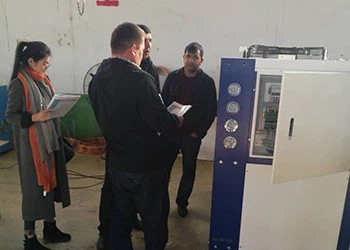
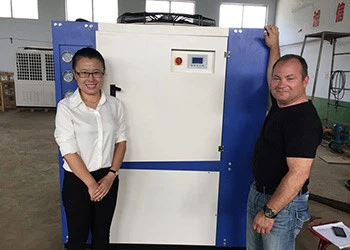
Real Factory:Our company has more than 5,000 square meters of production plants and more than 200 employees engaged in product production, research and development and after-sales service

What is Air Cooled Screw Chiller
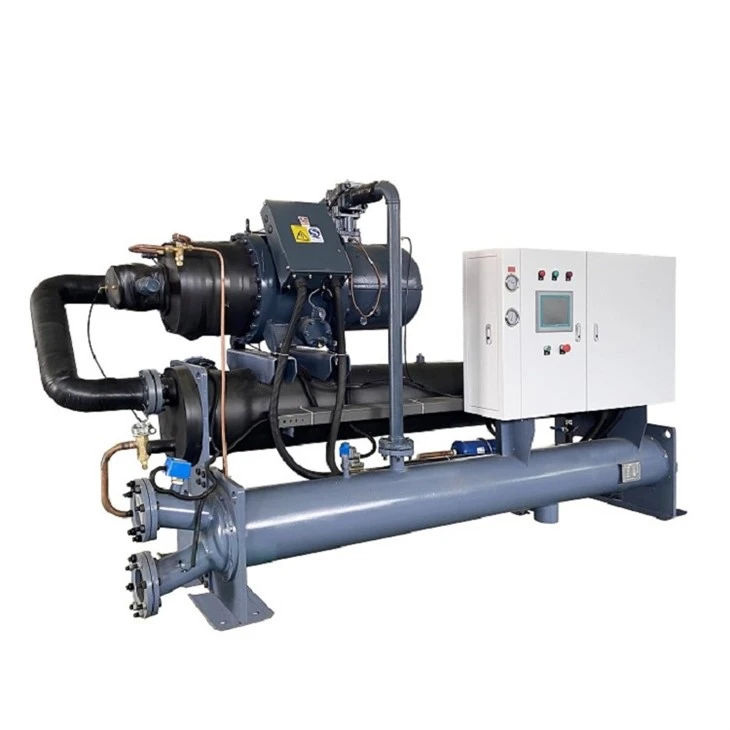
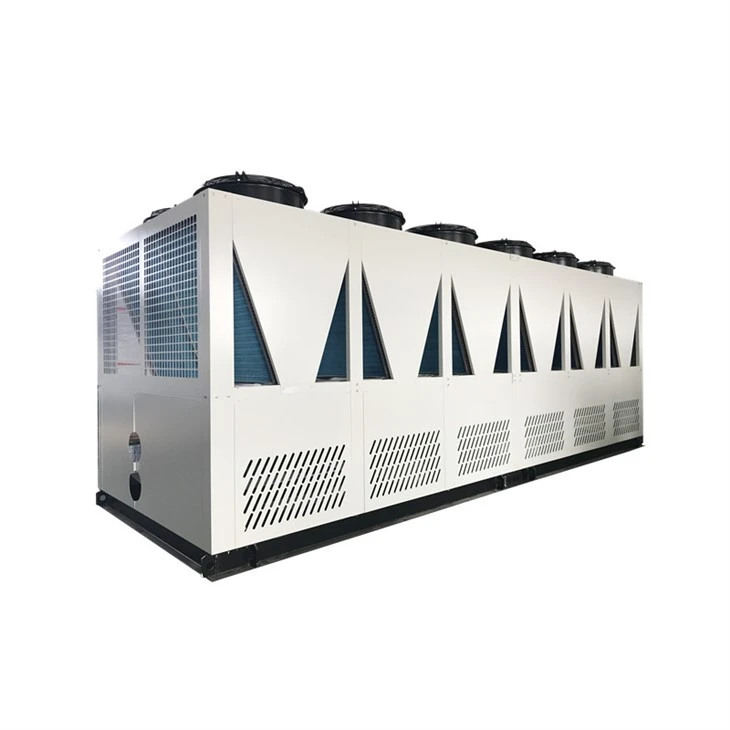
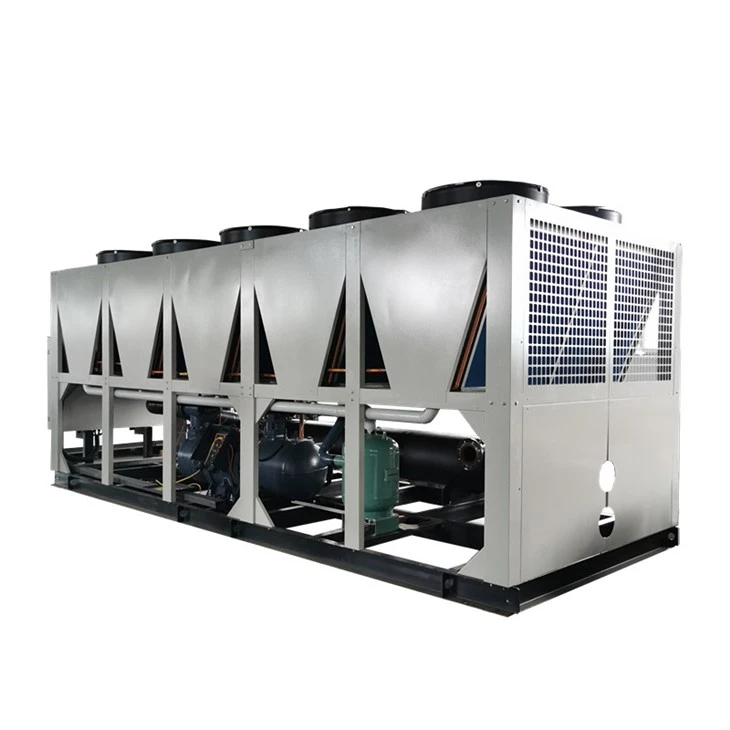
An Air Cooled Screw Chiller is a closed refrigeration system based on a screw-type compressor that uses air to lower the temperature of the industrial process. It efficiently removes heat from a process and discharges it into the atmosphere using air as a cooling medium. If you want to know the specifications and prices of Air Cooled Screw Chiller, please contact us!
Advantage of Air Cooled Screw Chiller
One might argue that water-cooled chillers are technically more energy-efficient due to their higher Coefficient of Performance (COP). However, air-cooled chillers hold their own in energy efficiency in several ways.
Unlike water-cooled chillers, air-cooled chillers do not require a cooling tower, which consumes additional energy for continuous water circulation and maintenance. The elimination of this additional equipment results in energy savings and a simpler cooling system.
Moreover, air-cooled chillers are equipped with efficient fans and condenser coils designed for optimal heat dissipation. As a result, they provide effective cooling while minimizing energy consumption and making them a cost-effective option for various applications.
Air-cooled chillers offer significant cost savings throughout their lifespan. The installation costs for air-cooled chillers are generally lower compared to water-cooled chillers. The latter require additional water infrastructure, including cooling towers, pumps, and piping, which can be costly to install and maintain. Air-cooled chillers have a simplified system design that reduces the complexity of installation and maintenance. Since they don't rely on water for cooling, there is no need for continuous water treatment, further reducing operating costs.
Additionally, air-cooled chillers require less maintenance due to their fewer components that could result in long-term cost savings.
One of the most significant advantages of air-cooled chillers is their flexibility in placement. They do not require proximity to a water source for their operation, which makes them suitable for installations in areas where water availability is limited or costly.
This flexibility opens up possibilities for cooling solutions in various locations and applications.
Moreover, air-cooled chillers offer space-saving benefits. They have a compact design and don't need cooling towers. This makes them ideal for installations in areas with limited space, such as rooftops or urban environments.
Air-cooled chillers have positive environmental impacts, primarily by conserving water resources. Since they eliminate the need for continuous water circulation, they significantly reduce water consumption compared to water-cooled systems.
This conservation of water resources is particularly critical in regions facing water scarcity.
Furthermore, the use of air-cooled chillers contributes to lower carbon emissions. By eliminating the need for cooling towers and reducing water treatment requirements, air-cooled chillers promote a greener and more sustainable environment.
Air-cooled chillers offer higher reliability and simpler maintenance due to their water-free operation. Water-cooled chillers often require water treatment and regular maintenance of cooling towers, which can be time-consuming and costly.
Air-cooled chillers eliminate these water-related maintenance tasks, serving to streamline the maintenance process and reduce the risk of system issues.
Components of an Air Cooled Screw Chiller
The evaporator is the part of a refrigeration system that absorbs heat from the air or other substance to be cooled. The heat then passes through coils into a compressor, where it is compressed and cooled even further.
he cooled refrigerant then passes through a condenser, which is usually in contact with the outside air. The condenser releases heat, which causes the refrigerant to change from its gaseous state back into a liquid state. This process requires energy, which comes from an external source such as an electric motor or gas engine that drives the compressor.
The cooled liquid refrigerant returns to the evaporator where it absorbs more heat and begins its cycle again.
The condenser is the part of a refrigeration system that removes heat from the refrigerant. It is an air-cooled device, so it must be mounted where air circulation is good.
The condenser contains tubes and fins that absorb the heat from the refrigerant flowing through it, causing the refrigerant to evaporate. The vapors are then carried back to the compressor where they are compressed again and cooled, completing the cycle.
The compressor is the heart of your refrigeration system. It is an air pump that compresses refrigerant gas and changes its state, which allows it to absorb heat. This process results in cooling, which is then distributed to your facility via your air ducts.
Your refrigerator's compressor works by drawing in warm air from the inside of the refrigerator and pumping it through coils in the condenser. The coils are located outside the unit, usually on top or on the back side of the refrigerator. The air passes over these coils, which cool it down so that it can be re-circulated into the refrigerator and keep your products cold.
There are two types of compressors used in refrigeration systems: reciprocating (also known as a piston) and rotary screw compressors. Reciprocating compressors use pistons to move the refrigerant through a system of valves and chambers. Rotary screw compressors use rotors with blades that spin at high speeds and cause pressure differences within the system to move refrigerant through valves and chambers.
The expansion device is an important part of a refrigeration system. It controls the flow of liquid refrigerant within the system. It also helps prevent overcharging and undercharging of your cooling system.
The purpose of an expansion device is to regulate the amount of liquid refrigerant entering the evaporator coil. This helps keep the pressure in your system at its optimum level, which prevents unnecessary costs and repairs.
An expansion valve consists of two parts: a cap and a body. The cap contains a diaphragm with a spring attached to it. The body is connected to the cap by two hoses, one for suction from the evaporator and one for discharge to the condenser.
When liquid refrigerant enters the expansion valve, it causes pressure on the spring-loaded diaphragm inside the cap. This pushes open one or more ports in the cap. These allow refrigerant to pass through into either suction or discharge lines depending on whether pressure is being increased or decreased.
The amount of liquid refrigerant that passes through each port depends on pressure differential between suction line pressure and discharge line pressure. It also depends on temperature differences between suction line temperature and discharge line temperature.
Factors to Consider When Choosing an Air Cooled Screw Chiller
Minimum Chiller Capacity
When opting for an air cooled chiller, the environmental characteristics and the device's capacity must be considered. When there is a cold environment and a large temperature difference between day and night, air cooled chillers are preferred. However, in those cases, the capacity of the device, whether minimum or not, must be considered. When the appliances are of low capacity, it is ideal to use air cooled chillers.
Effect of Chiller Height
The height of the surroundings is an important factor that must also be considered. Always pay attention to the height factor when purchasing an air-cooled chiller because the air cooled chiller capacity decreases as the altitude increases.
Chiller Control Type
When choosing an air cooled chiller, operators must consider how the chiller will be controlled. This is so because devices that can be easily controlled are more likely to promise more efficient work as well as performance.
Chiller and Refrigerant Pressure
Any types of chiller must be protected against high pressure as much as possible, whether the water is cold or the air is cool. For this purpose, the quantity of air that flows in the condenser must be high. At the same time, medium and low-pressure refrigerants should be preferred.
Resistance to Air Temperature
In air cooled devices, the device's remaining capacity is reduced by 1% for every 1°C. This is an important factor that will largely affect the choice when opting for an air cooled chiller. This change also greatly affects the compressor and increases the amount of power that is used by the compressor by 1%.
Evaporator Pressure Drop Value
In air cooled chillers, the pressure drop value of the evaporator must not exceed 60 kPa by a large amount. This must not occur in the air-cooled chillers that prefer the lowest pressure drop.
Physical Size of the Chiller
The size of the chiller is an important factor to consider. In the space of the building in which the chiller is going to be used, a small chiller must be chosen according to the available space. Usually, most air cooled chillers use little space.
The Amount of Noise Produced by the Device
The issue of the noise produced by the device during operation must also be considered. In places where noise is an important factor, categories of air cooled chillers with sound pressure less than 75dBA at a distance of 16.4ft (5 m) in an open space must be selected. There should be a preference for categories with low noise levels.
Number of Compressors
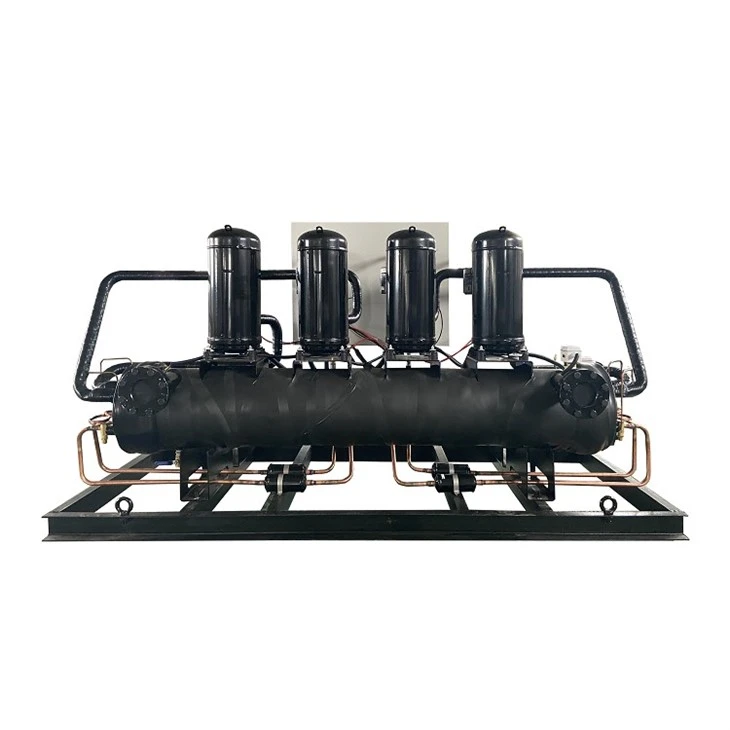
The number of compressors that an air cooled chiller contains is important. These are written in the specifications of the device.
How to maintain Air Cooled Screw Chiller
Maintain your Daily Logs
As basic as this may seem, having a daily record of operating conditions, the pressure and temperatures in the chiller unit, as well as the fluid levels and flow rate, could help quickly predict the likelihood of future damage to the chiller machine. Keeping a chiller log sheet is advantageous as a pre-emptive chiller maintenance schedule can be structured before the onset of actual damages.
Keep the Chiller Tubing Clean
The industrial chiller working principle is reliant on heat transfer to exert a cooling effect. In shell and tube and brazed plate heat exchangers, an obstruction to the flow of cooling fluid through condenser tubes will significantly diminish how efficiently a chiller transfers heat.
Over time, corrosion can accumulate inside the chiller tubing and impede the removal of generated heat. Therefore, it is necessary that regular quarterly or at least yearly cleaning of chiller tubes is scheduled and carried out.
Reduce the Temperature of the Condenser Water
Reducing the temperature of the water entering the condenser of an industrial chiller, significantly improves efficiency as it has to work less to exert its overall cooling effect. Although not recommended as standard practice, reducing the temperature of the water passing through the chiller's condenser unit may serve as a measure to temporarily overcome problems with its coil.
Inspect the Condenser Water Loops
Although all units Cold Shot Chillers manufactures are closed-loop chillers, some chiller condensers have water loops which utilize open cooling sources such as air-cooling towers. As a result of this environmental exposure, there is a tendency for the water to become contaminated with biological growths, corrosion, and scale which could affect overall heat transfer and chiller efficiency.
Chilled water loops should be inspected at least yearly and treated to remove contaminants. Regularly inspect your chiller's "Y" strainer and use an inline cartridge filter for additional protection.
Monitor for Refrigerant Leaks
The rate of cooling of a chiller is dependent on the amount of refrigerant circulating through its compressor. Valve stems sometimes vibrate loose and will result in refrigerant leaks. Refrigerant leaks from the compressor or the introduction of moisture into the system can also impact the cooling capacity of the chiller.
Checking for leaks and maintaining a proper level of refrigerant in the chiller's compressor unit will ensure optimal performance.
Measure the Glycol Concentration
Protection of system components from freezing is critical, as freezing can occur from the external ambient or internal system temperatures.
The evaporator (or other heat exchanger) is the most susceptible component to freezing, even during normal operation. The fluid entering the evaporator must be capable of passing through without forming ice. Ice formation quickly restricts the flow, causing further freezing and eventual rupture.
The chilled fluid needs to have a freeze point that is well below any temperature that the chiller is capable of cooling.
Maintain an Optimal Chilled Water Flow Rate
The rate of flow of chilled water must be maintained to ensure satisfactory chiller cooling performance. Chillers need between 2.5 and 3 gallons per minute (GPM) per ton to provide efficient heat exchange. You will typically see a 10°F temperature exchange at 2.5 GPM per ton, and an 8°F temperature exchange at 3 GPM per ton.
Look out for Non-condensables
Another significant aspect of chiller maintenance is keeping air and moisture out of your chiller system. As these elements can diminish chiller efficiency and increase energy consumption, it is vitally important that they are quickly purged from the condenser circulation.
Examine the Compressor Oil
Laboratory analysis of the oil from the compressor unit of a chiller should be done every year and changed according to recommendations from the analyzing lab. When oil changes are made, it is necessary for filters to be tested and replaced if faulty. However, oil analysis is limited to only centrifugal chiller operation and maintenance. Newer magnetic bearing frictionless chillers do not utilize oil.
Inspect Motors and Starting Mechanism
Routine sensor calibration, microprocessor control inspection, safety checks for electrical connections, wiring, and switchgear, are all recommended. Additionally, regular drive motor checks are required to keep chillers fully functional.
Install Variable Speed Drives
Chiller motors consume significant amounts of electricity when in use, which increases operation costs. Installation of variable frequency drives (VFDs) will offer energy savings as varying the motor speed matches motor efficiency to load, minimizing energy waste. These VSDs can allow chillers to operate normally even on emergency power generators.
Our Factory