

Cold Room Panel
You Professional Cold Room Panel Manufacturers
Jinan Mgreenbelt Machinery Co., Ltd. are core enterprises of MGREENBELT compressed air system products and services chain. We specialize in producing High Pressure Oil Free Compressor, Oil Free Air Compressor, Medium Pressure Screw Air Compressor, Screw Type Air Compressor, PET High Pressure Air Compressor, and other Air Compressor.
Why Choose Us
Our Factory
Our company has more than 5,000 square meters of production plants and more than 200 employees engaged in product production, research and development and after-sales service.
Advanced Equipment
You can choose Megbet with confidence Provide reliable and technologically advanced screw air compressors, complete sets of post-treatment equipment (air compressors, dryers, filters, air storage tanks), as well as matching consumables and spare parts.
OEM & ODM Capabilities
We offer customized services, tailoring products to your specific requirements. capacity to ensure in time delivery and transport to the destination in the first time.


Features of Cold Room Panel
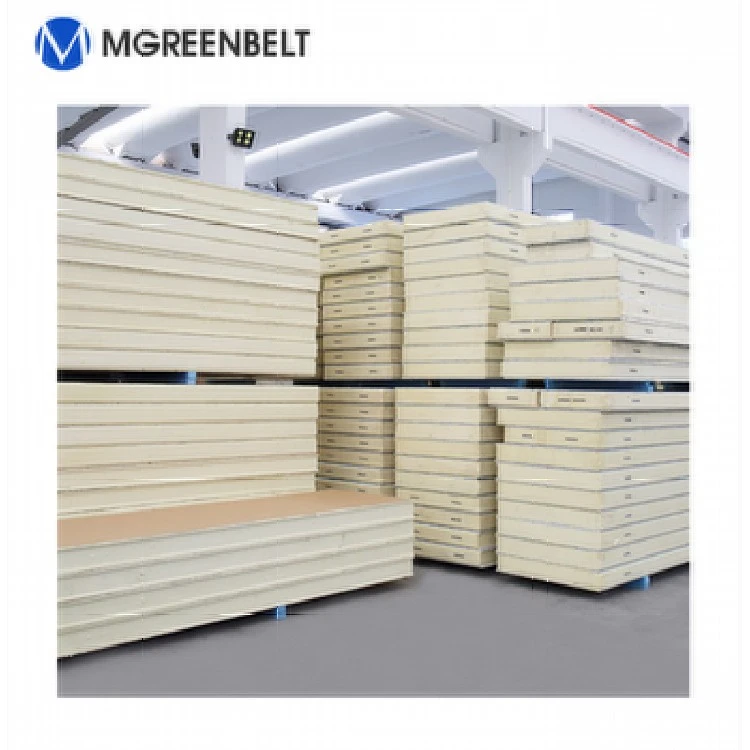
Cold room panels are typically constructed from polyurethane (PUR) or polyisocyanurate (PIR) foam, sandwiched between metal sheeting. This design provides both excellent insulation and structural durability.
Insulation Efficiency
The foam insulation in cold room panels is designed to have a low thermal conductivity, which helps in maintaining low temperatures with minimal energy loss.
Customizable Thickness
Panels are available in thicknesses from 50mm to 200mm or more, allowing for customizable insulation suited to various applications, such as deep-freeze storage.
Durable Surface Coatings
The metal cladding—usually galvanized steel or aluminium—can be coated with anti-corrosion or antimicrobial finishes, creating a hygienic, durable surface.
Interlocking Mechanism
Many panels use a tongue-and-groove interlocking system with cam locks, simplifying assembly, reducing air leakage, and enhancing insulation.
Different Types of Cold Room Panels
Here are some of the common types of cold room or insulated panels available:
Expanded Polystyrene Insulated Panels
Expanded Polystyrene Insulated Panels utilize a high-grade, lightweight foam called Expanded Polystyrene. Made from closed-cell insulation technology, this form of foam is rigid and available in various different levels of strengths to match the intended load and back-fill force of the cold room. The best feature of closed-cell insulation technology is its ability to withstand maximum water absorption and ensure a strong barrier against vapor permanence.
Polyurethane Insulated Panels
Polyurethane (PU) Insulated Panels are one of the most commonly used insulation solutions in cold rooms, chillers, and freezers. Their high thermal resistance makes them a great preliminary insulation solution especially for cold room projects that need to be assembled quickly. These panels are installed using the tongue-and-groove system as it is simple and most effective for this type of panelling.
PolyIsocyanurate Insulated Panels
Polyisocyanurate (PIR) Insulated panels are highly effective, have extremely low thermal conductivity, light weight and have high strength to weight ratio. Therefore, it is the natural choice of product usage for insulation application for construction projects. Similarly, Polyisocyanurate (PIR) have exceptional fire performance as compared to other materials above. When incorporated into building products, it can be stipulated as being able to meet some of the most demanding fire performance requirements in the industry.
Cold Storage for Food and Beverages
One of the most common applications of cold room panels is in the food and beverage industry. Cold room panels help create an airtight environment that maintains the correct temperature and humidity levels required to prevent food spoilage and maintain product freshness.These panels also provide hygienic surfaces that are resistant to moisture, mold, and bacterial growth, making them ideal for use in food storage facilities.
Pharmaceutical and Medical Storage
The pharmaceutical industry relies heavily on cold rooms to store vaccines, medications, and biological samples. Cold room panels are crucial in maintaining the precise temperature ranges required for these sensitive products. Temperature fluctuations can cause some medications and vaccines to lose potency, making consistent cold storage essential for product efficacy.

Cold Chain Logistics and Warehousing
Cold room panels are used to build cold storage warehouses and refrigerated trucks, where maintaining a consistent temperature is crucial for product preservation during transport.In warehousing, cold room panels help create energy-efficient, temperature-controlled environments that meet the stringent requirements of cold chain logistics. These panels allow warehouses to maintain specific temperature ranges for various products, including frozen goods, fresh produce, and pharmaceutical supplies.
Supermarkets and Retail Stores
Cold room panels are commonly used in supermarkets and retail stores for building walk-in refrigerators and freezers. These cold rooms store fresh and frozen food products, ensuring that they remain in optimal condition for customers. Cold room panels provide the necessary thermal insulation to maintain temperatures even with frequent door openings and closings.
How to Choose Correct Thickness of Cold Room Panel
When choosing cold room panels for your cold storage, it is important to know the thermal insulation and airtightness required to select the most suitable thickness. These can range from 80 mm to 200 mm thick. The chosen thickness will depend on the budget available for the project and the refrigeration requirements.
Cold Rooms for conservation (+0 °C)
A thickness of 80 mm is recommended for the roof and facade of cold rooms intended for food storage or controlled temperatures that do not require high insulation.
Cold Rooms for freezing (-1ºC to -20 °C)
For installations that require controlled temperatures below -10ºC to -20ºC and high insulation, it is recommended to install a cold room panel with a thickness of 100 mm to 140 mm.
Freezing tunnels (-40 °C)
The ideal thickness for cold storage facilities where temperatures below -20ºC need to be maintained, such as laboratories, meat or fish ultra-freezing, among others, is between 150 mm and 200 mm.
The floor of the area where the cold room will be installed must be flat. Otherwise, the panels will not fit together properly. If the installation will be made in a place where there will be continuous entrance and exit, such as a cold storage, processing area, the level difference should be taken into account in the floor insulation.
When installing a cold room, the following steps should be followed and checked in order
●Installation of U channels: U channels are placed on a smooth floor according to the cold room size ordered. It is fixed to the ground with the screws from the mounting kit.
●Floor panel Installation : If the floor panel is in the project, it is mounted as shown in the project drawing so that it remains inside the u-channels.
●How to Install Cold Room Panels: Wall panels are placed in U channels in accordance with the project. If necessary, they are cut from the corners according to the room size.
●Installation of Ceiling Panels : During the installation of Ceiling Panels, they are mounted by placing them on the notch on the wall panels.
●Assembly of Cold Room Door : The door frame is inserted into the remaining space for the door.
●If the width of the door frame is more than one panel width, the panel is cut according to the size of the door frame and placed in the appropriate space.
●It is necessary to complete the insulation by using silicone to the places where the wall or ceiling panels joint each other.
●Accessory Installation: L outer sheets are produced as 5*a+30 mm according to the panel thickness. It is mounted in such a way that the long side covers the part where the panel foam is visible.
●The interior corner accessory is mounted in the interior of the cold room in such a way that it covers the panel junction surfaces on the wall-ceiling, wall-floor and corner parts.
Our Factory