

Industrial Air Compressor
Why Choose Us
Jinan Mgreenbelt Machinery Co., Ltd. are core enterprises of MGREENBELT compressed air system products and services chain. We specialize in producing High Pressure Oil Free Compressor, Oil Free Air Compressor, Medium Pressure Screw Air Compressor, Screw Type Air Compressor, PET High Pressure Air Compressor, and other Air Compressor.
Best After-Sales Service:We have a large number of professional after-sales service teams. Should you have any inquiries after receiving your shipment, feel free to reach out to us anytime.
Rich Experience:We have 17 years of manufacturing experience and have provided professional solutions to many customers.
OEM & ODM Capabilities:We offer customized services, tailoring products to your specific requirements.
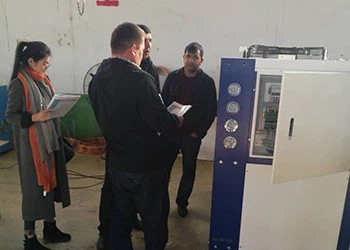
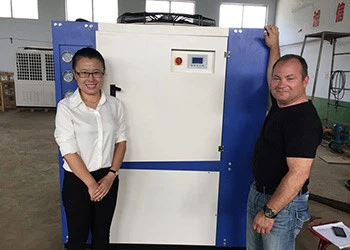
Real Factory:Our company has more than 5,000 square meters of production plants and more than 200 employees engaged in product production, research and development and after-sales service


What is Industrial Air Compressor
An industrial air compressor is a mechanical device used to generate pressure in compressible fluids or gasses, the most common being air. A variety of compressors are used in the industry to provide functions such as: instrument or shop air. powering air tools, abrasive blast equipment, and paint sprayers. If you want to know the specifications and prices of Industrial Air Compressor, please contact us!
Advantage of Industrial Air Compressor
Efficiency is a key goal for any industrial operation. Industrial air compressors offer a range of features and advantages that can significantly improve operational efficiency. One of the primary benefits is their ability to provide a constant and reliable source of compressed air. This ensures that tools and equipment powered by compressed air, such as pneumatic drills, nail guns, and spray guns, can operate at their optimal performance levels consistently.
Additionally, industrial air compressors can be tailored to meet specific operational requirements. They can deliver different pressure levels and airflow rates, allowing businesses to select the most suitable compressor for their needs. This customisation ensures that the compressed air system operates efficiently, reducing energy wastage and minimising downtime.
Energy efficiency is a key consideration for any industrial operation. Industrial air compressors are designed with energy-saving features that help reduce power consumption and lower operational costs. One such feature is the use of variable speed drives (VSDs). VSDs allow the compressor to adjust its speed according to the air demand, resulting in significant energy savings. By using VSD technology, businesses can reduce their electricity bills and minimise their carbon footprint.
Furthermore, industrial air compressors have built-in systems for heat recovery. The compression process generates heat, which is typically wasted. However, with heat recovery systems, the heat produced during compression can be captured and repurposed for heating water or space within the facility. This not only reduces energy consumption but also provides additional cost savings.
Industrial air compressors offer enhanced productivity and versatility across a wide range of applications. Their ability to power multiple tools simultaneously allows for efficient and streamlined operations. Whether it's operating pneumatic tools, running conveyor systems, or controlling automated processes, industrial air compressors provide the necessary power and flexibility.
Moreover, industrial air compressors can be integrated into complex systems and automated processes, enhancing productivity further. They can be connected to control systems that monitor and regulate the compressed air supply, ensuring optimal performance and reducing the risk of downtime.
Maintenance costs and equipment downtime can significantly impact the overall efficiency and profitability of an industrial operation. Industrial air compressors, when properly maintained, can contribute to a significant reduction in maintenance requirements and extend the lifespan of associated equipment.
Regular maintenance, such as filter replacements, oil changes, and inspections, can prevent costly breakdowns and ensure the compressor operates at its best. Additionally, advanced compressor systems incorporate self-diagnostic features that alert operators to potential issues before they escalate into major problems. This proactive approach to maintenance allows for timely repairs and avoids unplanned downtime.
As businesses strive to reduce their environmental impact, industrial air compressors provide an eco-friendly solution. Modern compressors are designed with energy-efficient components and technologies that minimise power consumption and carbon emissions. By investing in an energy-efficient compressor, businesses can contribute to sustainability efforts while also benefiting from reduced operational costs.
Additionally, industrial air compressors have the advantage of being oil-free. Oil-free compressors eliminate the risk of oil contamination in the compressed air supply, making them suitable for applications that require clean and oil-free air, such as food processing, pharmaceutical production, and electronics manufacturing.
Industrial environments can be hazardous, with noise pollution being a significant concern. Industrial air compressors are engineered to operate quietly, reducing noise levels and creating a safer working environment. By minimising noise pollution, businesses can comply with health and safety regulations and prevent potential hearing damage to workers.
Furthermore, industrial air compressors incorporate safety features such as automatic shutdown systems and pressure relief valves. These safety mechanisms protect the compressor and the surrounding equipment from excessive pressure, ensuring the well-being of both employees and machinery.
Types of Industrial Air Compressor

01.The Reciprocating Single Acting Compressors
In contrast, the two-stage compressor compresses the air to an intermediate pressure in the first stage. Two stage units can be used to provide higher pressures than single stage compressors provide. The compressed air that goes into the second stage first passes through an intercooler. The intercooler eliminates some heat generated in the first-stage cycle.
Compressors with many pistons operate within a cycle of duty rather than continuously. The cycles permit the heat generated from the operation to dissipate mostly through air-cooled fins.
02.The Reciprocating Rocking Piston Compressors
03.The Reciprocating Diaphragm Compressors
Akin to the diaphragm pump, the flexible disc seals the drive from the process fluid, thereby removing the possibility of a lubricant coming into contact with the gas. Thus, due to the non usage of a sliding seal between moving parts, there is no lubrication in such designs.
Diaphragm compressors are the preferred option when contamination of the output air needs to be avoided in laboratory or hospital applications. They have limited output and pressure and thus are mostly used in light-duty applications.
04.The Rotary Sliding Vane Compressors
05.The Rotary Helical Screw Compressors
06.The Rotary Scroll Compressors
Application of Industrial Air Compressor
The Mining Sector.
The compressed air is fundamental to the mobile service vehicle fleet, which uses the compressed air to perform routine and breakdown maintenance on mining machinery and plant.
Utility Maintenance Industry.
The gas, water and power networks rely on compressed air to run specialised tooling such as line boring tools, rock breakers, jackhammers, die grinders and venturi pumps. The air supply allows the specialised providers to reduce unnecessary excavation to access network faults.
Mobile Mechanics.
Utilise the compressed air with their pneumatic tools. These are rattle guns, die grinders, impact wrenches, blowing out filters, clearing debris from radiators and re-inflating tyres. Another commonly used tool is an air jack to lift the vehicle to gain access underneath the vehicle or remove components such as tyres, diffs and transmissions.
The Mobile Tyre Replacement Industry.
The tyre industry focuses more on the precise pressure of tyre inflation, ranging from tiny (PSI) pounds per square inch on small cars to larger tyres seen on tractors, semi-trailer trucks and specialised equipment, which may require 165 or higher (PSI).
Boilermakers and Industrial Welding Contractors.
Boilermakers and welding contractors enhance their traditional techniques by introducing additional compressed air into the welding process. This is commonly known as air arc gouging. They also can incorporate high-pressure air to assist in cutting thick metals to ensure the temperature is steady and the intensity of the arc blows cleanly without slag created.
Civil Construction Applications.
You may have seen the tow behind air compressors on many construction and civil fracture sites. These are common-use pneumatic supplies for other auxiliary equipment needed to complete the construction. Pneumatic pumps, called venturi pumps or transfer pumps, are used when excess water needs to be pumped out of the working area after rainfall.
Drill Rigs and Geological Excavation Industries.
Drilling and geological proving rigs typically use a combination of hydraulic-powered boring drills, large amounts of water and compressed air. The compressed air can force the excess water out of the hole, like blowing a high bubble at the end of a straw. Forcing the water to the surface. It also can be used to pressure test the pipe, ensuring the hollow pipeline connections are secure and properly threaded together.
Component of Industrial Air Compressor


Actuators
The actuator creates rotary or linear movement and is what outputs the compressed air to the tools or processes that use pressurized air for power. Any leaks or other deficiencies in the air movement coming into the actuator will result in a decrease in the air force coming out. Small particles that have found their way into the air will cause blockages in the actuator, as well as many other parts of your air compressor.
Bearings
Industrial-class bearings ensure a long operating life for the most demanding of operations. Quality bearings will give you peace of mind as your air compressor operates at high revolutions with high pressure. Bearings are highly dependent on the proper lubrication at the right viscosity.
Belts
Belt tension should be checked every 40 hours for wear and operation. The belts need to be of the highest quality and fit properly, as they work to drive the operation of your compressor.
Bumpers
Valve bumpers surround the valves for added protection from accidental contact. Replace this small shielding part when needed to prevent the more expensive replacement of valves.
Bushings
Bushings create some space between moving parts and are used in the internal components of the air compressor. Your bushings offer protection from serious breakdowns, minimizing side-to-side play.
Connecting Rods
The connecting rods take a heavy workload and are used to move the piston up and down in the crankcase. They are a highly durable part of your air compressor. You may never need to replace connecting rods unless proper maintenance is not performed regularly on your system.
Couplings
These parts are used on internal components to prevent leaking from the high-pressure system.
Desiccant dryers/Q-sorb
Our air dryers purify your compressed air by absorbing water vapor. A flow of 'wet' compressed air is passed through two pressurized tanks that contain our highly absorbent desiccant. Q-Sorb is an advanced formula of activated alumina that significantly reduces operating costs. Keep your air dryer operating efficiently with regular checks of desiccant and filters.
Gaskets and Seals
For reliable airflow and to maintain intended pressure, your air compressor should be air-tight with quality seals and gaskets. There are various sections of your air compressor that have gaskets and seals: valve plate to head gasket, crankcase gasket, intercooler gasket, oil seal and the shaft seal, to name a few. These small parts keep contaminants out and the pressurized air inside.
Gauges
The gauge on your air compressor measures the pressure of the air in your tank. Your gauge is informative in a number of ways, specifically for daily checks to ensure your pressure is at the intended level so you can attend to any deficiencies as soon as possible.
Motors
In general, your air compressor has an electric motor to run the operation of compressing air. Different compressors require different sizes of motors (hp). If you're replacing a worn-out motor, be sure to have the recommended replacement motor installed.
O-rings
Used for a tight seal, O-rings help keep your system running at peak performance.
Piston Rings and Rods
Our reciprocating piston models create air pressure with the movement of the piston and connecting rods. These parts are under great pressure when in motion and require a lubricant free of contaminants and the highest quality. Fluid analysis of your QuinSyn fluid in a rotary screw compressor is important for overall function and to detect possible issues early. It's also especially important to use Quincy oil to prevent premature wearing of your piston rings that prevent excessive oil carryover.
Rotors
In our rotary screw air compressors, assembly consists of two interlocking helical rotors that compress the air coming in through the inlet valve. With proper operation, these rotors have an extremely long life.
Shims
Adding supporting spacers in the installation of your air compressor may be necessary. These metal shims will provide you with the needed support for a reliable system.
Springs
Various components of your compressor use springs for the mechanics of the system. Determine when to replace springs with regular service checks.
Valves
Allowing air in and out, draining water and regulating airflow, valves are an essential component that require regular inspection during your interval checks and regular servicing. Our quality engineered valves are designed for resilience and a long life.
Our Factory