

Cold Room Door
Why Choose Us?
Best After-Sales Service
We have a large number of professional after-sales service teams. Should you have any inquiries after receiving your shipment, feel free to reach out to us anytime.
Real Factory
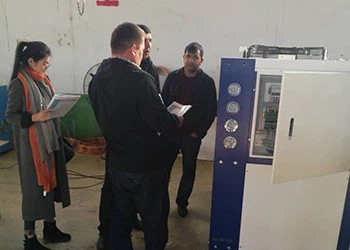
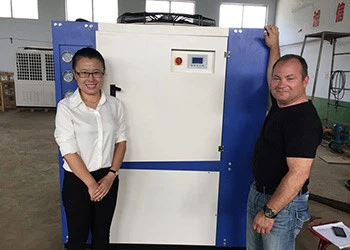
Our company has more than 5,000 square meters of production plants and more than 200 employees engaged in product production, research and development and after-sales service
Rich Experience
We have 17 years of manufacturing experience and have provided professional solutions to many customers.
OEM & ODM Capabilities
We offer customized services, tailoring products to your specific requirements.
What is Cold Room Door?
Cold room doors are perfectly sealed and highly insulated doors for industrial and commercial refrigerators and cold rooms. Cold room doors can be insulating – i.e. capable of thermally insulating the room – or semi-insulating – i.e. used only for logistical reasons and for regulating passage. Cold room door must ensure optimal insulation, enable swift and secure operation and, in some cases, be lockable.


Advantages of Cold Room Door
Energy efficiency
Cold storage doors are designed to provide excellent insulation, minimizing heat transfer between the controlled environment and the outside. This helps maintain consistent temperatures inside the storage area, reducing the amount of energy required to cool or heat the space, and ultimately lowering energy costs.
Temperature control
These doors are specifically designed to maintain a constant temperature within the cold storage area, making them ideal for facilities that need to store perishable items or temperature-sensitive materials. They help prevent fluctuations in temperature that could potentially damage goods.
Durability
Cold storage doors are built to withstand the harsh conditions and environments associated with cold storage facilities. They are typically made from high-quality, durable materials that resist wear and tear, ensuring a long service life.
Improved safety
Cold storage doors often come with features such as airtight seals, heavy-duty hardware, and safety mechanisms that prevent accidental closures or entrapment. These features help maintain a safe environment for workers and protect stored items.
Enhanced hygiene
Cold storage doors are designed to be easy to clean and maintain, reducing the risk of contamination in facilities that handle food or other perishable items. Their smooth surfaces and non-porous materials minimize the accumulation of bacteria or dirt.
Customizability
Cold storage doors are available in various sizes, materials, and configurations to accommodate the specific needs of each facility. This allows for greater flexibility in design and layout, ensuring optimal use of available space and efficient workflow.
Noise reduction
Many cold storage doors have built-in sound insulation, which helps reduce noise transfer between the storage area and other parts of the facility. This can contribute to a more comfortable working environment and minimize disruptions.
Environmental protection
By maintaining consistent temperatures and reducing energy consumption, cold storage doors can help facilities comply with environmental regulations and minimize their carbon footprint.
Types of Cold Room Door
Hinged Doors for Cold Rooms
Swing doors are making single- or double-leafed, depended on the doorway size. As a rule, the single-leaf doors are used for a doorway up to 1.2 m; double-leafed ones are usually applied with larger dimensions. The door panel is fastened on two or more hinges, depending on the size (doorway height). The door is called “right” or “left”, depending on the location of the hinges and opens to the corresponding side. Advantages of the hinged doors − ease installation and low price.
Sliding Doors for Cold Rooms
The panel of sliding doors is moved on rollers along the guide (slide-rail). They can be done with the right or left roll backing (of opening). When the gate is closed, they "sit down" and tightly press under their weight and the actions of clamping rollers, by providing the good sealing of the gate. In addition to the manual opening, the automatic electric drives are used for the sliding gates that can be activated with console and, optionally, radar, photocells, magnetic loops, a remote control.
Medium and Low Temperature Doors
The hinged and sliding doors for refrigerated chambers differ in depending on the temperature regime:
doors of medium temperature mode (from 0 0С and above) for chambers and warehouses;
low-temperature doors for freezing chambers and warehouses (from -15 to-25 0С and below).The Main Differences Between Medium- and Low-Temperature Doors Thermal insulation thickness of refrigeration doors depends on the specific use and can range from 60 to 160 mm. The standard thickness for medium-temperature cold rooms is 60-80 mm, for low-temperature ones − 100-120 mm. In the chambers of shock freezing of products (-30-40 0С) and the warehouse complexes with large doorways, there must be the gates with a heat-insulating thickness of 140-160 mm. Low-temperature doors must be equipped with a built-in heat tracing cable to prevent the freezing of panel to the door frame. In addition, in low-temperature doors, the construction of the frame and handle may be differing due to the need to destroy the "thermal bridges", which can be neglected in the medium-temperature mode.
Vertical Gates of Guillotine Type
In that version of the door its panel rises, which is convenient, when there is no free space to open the sliding gates. Such gates are usually used with an electric drive, since they are difficult to open manually.
The materials used for cold room doors can vary and affect performance regarding cold-proofing, durability, antimicrobial capacity, and other factors. Some regulations dictate which specific materials we can use to produce cold-room door components, but in other cases, we can choose which materials to use. The three main materials used for cold room door components are composite plastic, stainless steel, and aluminum. Each of these materials has different characteristics that we can use successfully depending on the desired performance.
Composite plastic materials are a large family of materials used in industry that are constantly evolving to be lighter while maintaining performance in terms of tenacity and resistance to mechanical stimuli. These characteristics make plastic components ideal for refrigeration. Industrial refrigeration is where plastic components must perform well over time despite continuous stress and exposure to low temperatures and humidity.
Plastic is not prone to corrosion. Consequently, plastic is highly suitable for this context, primarily in composite materials such as glass fiber-reinforced nylon. Plastic materials are not thermally conductive, which benefits the efficiency and cold-proofing of a cold room.
In addition to their functional benefits, composite plastic materials are lighter and less expensive than steel and easier to process on an industrial scale. This advantage makes production more efficient and allows quicker and more customized product manufacturing. Using composite plastic materials can also improve the functionality and ergonomics of the final product. Consequently allowing greater flexibility for the designer. Overall, composite plastic materials offer numerous advantages in terms of performance, efficiency, and cost-effectiveness for cold room door components.

The components of a cold room door consist of all the elements that connect the moving and fixed parts of the room; that is, the door and walls. By nature, these products are mobile and dynamic. They are subject to different types of forces and are designed specifically to guarantee movement. Therefore, these elements are subject to a great deal of stress, especially when the door is large.
The following fall under the family of parts for cold room doors:
● Hinges
● Fasteners
● Sliding systems
● Gaskets
These parts are generally subject to significant stress, and it is no coincidence that if the door malfunctions, the parts are suspected to be the cause of the problem.
Given their importance in guaranteeing the performance of the door, it is important that they—and the door as a whole—are designed carefully and specifically, considering the environment in which the door will be installed, the required temperature inside the cell, the use of the cell, etc. Only in this way a really effective door can be designed in relation to the specific environment where it will be installed. For example, a handle with an external fastening mechanism, is recommended for a room whose internal temperature is below zero, given that the mechanism of an interior clamp may freeze in very humid rooms, resulting in malfunction, or the handle becoming jammed. The choice of part type may therefore not be made in advance, but should always take into consideration the actual situation in which the door will be installed.
How Can You Choose Components for the Door of a Cold Room?
Complexity:In our experience, this is one of the most important parameters, and the hardest to evaluate. In fact, a more complex product is not always the best solution for the door being installed. It can be sometimes preferable to turn to simpler models, which would perhaps lead to fewer adjustments while nevertheless guaranteeing excellent performance in relation to the type of door being designed.
Simplicity of assembly:As any installer knows, ease of assembly and adjustment are essential elements to consider when choosing parts.
Quality-price ratio:Despite the size of the door being designed and the required temperature inside the room, choosing high quality components is fundamental for increasing the efficiency of the door and therefore for achieving the expected seal. Given that efficiency and economic convenience always proceed in step, reflecting carefully on the quality-price ratio of what will be installed leads to the best performance and tangible savings over time.
Aesthetics, design, and functionality:A properly designed door is essential for guaranteeing the efficiency of a cold room, and since some finishing elements (the fastener, for example) are visible, it may also be important to assess their appearance in the selection phase, keeping in mind that the design of the parts also influences their ergonomics and ease of cleaning, that is, their broader efficiency and durability over time.
Reinforcements for Cold Room Doors: What They Are, Where to Place Them, And When to Apply Them
During the construction of a cold room door, special reinforcements should be inserted to allow the parts to be fixed safely and stably. This is done to ensure that the installed components (handle, hinge, sliding system...) remains fixed and does not move, even when subjected to repeated and significant stresses.
In fact, the door panel of a cold room in many cases consists of a very thin sheet-metal casing filled with insulating material (polyurethane), which in turn is very light. This type of structure may not be able to support the stresses necessary to move if it is not properly reinforced at the right points. It is different if the door panel is made by cutting a larger panel to size. In this case, different types and numbers of reinforcements of are required, but their presence is still essential for guaranteeing that the door seals correctly and that the internal temperature of the room is maintained.
The reinforcements are therefore an essential element for guaranteeing the seal of the door, allowing it to achieve excellent performance over time, but we must not forget that these elements weigh down its general structure and constitute potentially problematic points. Indeed, the reinforcements consist of metal plates generally made of stainless steel, iron, or sheet metal, which must be suitably fixed to both the door and the frame at the same point. During the design phase, it is therefore essential to define how many are needed, where they must be placed, how they must be fixed, and so on, considering the size of the door, its weight, the type of part to fix to each particular reinforcement, etc.
What External Elements Affect the Performance of the Cold Room Door?
For the door of a cold room to work with perfect efficiency, it is essential that the walls of the room be planar, perpendicular, and vertical, and that the floor not be inclined excessively. Both of these elements may be particularly problematic, because the walls are never perfectly straight and the floors of cold rooms are sometimes specifically designed to have a certain inclination (for example, if the centre of the room has a grate for draining liquids).
If assessed properly, these sorts of situations do not compromise the ability to obtain a high-performance door. What is certain, however, is that the door will be subject to significant stresses which may really put it to the test. This is why it is important to consider all these aspects when designing the door of a cold room, so that the correct choices are made and adjusted consciously, including considering the choice of the various parts. Unfortunately, however, this is not always possible, and some problems may emerge only in the construction phase, when the door has already been produced and is ready for installation. Another consideration is that the floor of the room is not always finished when the door is installed, a situation that further complicates matters.
An inadequately designed door is not necessarily an inadequate door, but it will probably not guarantee the best performance over time. In the long term, the external elements will influence the seal of the door and cause the parts and gaskets to wear out faster, and they may also wear unevenly. (For example, one of the wheels on a sliding door commonly wears out before the other.)
Designing a Cold Room Door: 6 Important Things to Keep in Mind
The cold room door must, first and foremost, be functional in terms of the way in which it will be used, which is why how the room is accessed is the first thing to consider during the design phase. In a relatively small cold room, where the staff deposit and collect products without using any special equipment, the door may have very different features to that of a cold room in which the operators have to use a trolley or a forklift. The size of the door must be suited to the goods that are to be stored and handled there to avoid any dispersion when it is opened. But the range of possibilities doesn’t stop here: in large, completely automated cold storage warehouses, the trolleys that move the goods enter and exit through automatic doors.
Another element to consider during the design phase is the structure of the building that contains the cold room. If, for example, the cold room is located in a narrow corridor, the door should take up as little space as possible. In addition, care should be taken to avoid corners, as these would make it difficult to pass or access the room. The type of flooring and the presence of steps should also be taken into account from the early stages of the design phase.
Once the best type of door and its measurements have been determined, it is worth dwelling on a series of more technical aspects. The first is the thickness of the door, which basically boils down to two choices. The door can be of the same thickness as the cold room wall, to maintain the same level of insulation, or it can be thicker or thinner, depending on the internal layout and the availability of components and accessories.
Many doors, especially relatively large ones, cannot be moved manually, which is why the possibility of adding a motor should be considered at the start of the design phase. If this is considered necessary, it should be designed to suit the weight and size of the door.
One of the main features of a cold room door is its ability to maintain a high performance level over time. Consequently, top quality components (gaskets, hinges, handles, pulleys, accessories, etc.) must be chosen during the design phase. The components of the door should be made of technical materials that guarantee strength and durability.
Once all the structural aspects of the door have been defined, there is one last feature worth thinking about: its design, which is often linked to economic and functional factors. The choice between a flush, semi-rebated or overlapping door may be influenced by how the finished product looks, not to mention all the other important practical and production aspects. A flush door, for example, completely vanishes into the thickness of the wall, creating a very appealing visual effect and it is also easier to clean. All these aspects should be carefully assessed during the design phase so as to choose the optimal solution in terms of functionality, quality-price ratio and aesthetic appeal.
Environmental Control
Environmental control is critical to cold storage. Loss of temperatures can compromise product quality. Food safety is on high alert when environmental control is lost in a cold storage warehouse or processing plant.
Energy and Efficiency
Choosing the right cooler door can vastly improve your facility’s efficiency. For instance, a fast-operating door enables the product to move through the opening quickly. This reduces the amount of time the door is open, cutting down the transfer of energy, as mentioned above. In addition, high speed doors will improve the traffic flow through the facility. A proper analysis of the facility’s efficiency and operation issues can lead to selecting the right door.
Safety
You have heard it before; safety is no accident. Increased safety at these busy facilities is at the core of any cold storage facility. Whether you are trying to maintain optimal temperatures, eliminate ice and frost buildup, or avoid slippery floors, proper door selection can play a huge part. Additionally, high traffic openings in cold storage facilities will demand higher visibility than spaces with lower traffic. Selecting high speed doors that include various safety features i.e., audible alarms, LED light indicators, photo eyes, safety reversing edges, and light curtains, will create a safe operation.
Activation
When doors fail to open, it is usually the door that takes the blame, when in reality it is the activation controls. Choosing the right door activation i.e., motion detectors, floor loops, pull cords, or push buttons, cannot be overlooked. Installing the proper activation can improve productivity, downtime due to damage, and unwanted opening and closing of the door. When deciding on the best activation for your door opening, be sure to analyze the physical attributes of the opening, traffic flow through the facility, and understand the various activation devices available.
The Manufacturer
The door manufacturer you choose in the end should offer a complete product portfolio that provides solutions for multiple applications. Not doing so creates a challenge in sourcing parts, providing service, and warranty claims. In addition, you could save money upfront by bundling your purchase.
Our Factory
Jinan Mgreenbelt Machinery Co., Ltd. are core enterprises of MGREENBELT compressed air system products and services chain. We specialize in producing High Pressure Oil Free Compressor, Oil Free Air Compressor, Medium Pressure Screw Air Compressor, Screw Type Air Compressor, PET High Pressure Air Compressor, and other Air Compressor.