

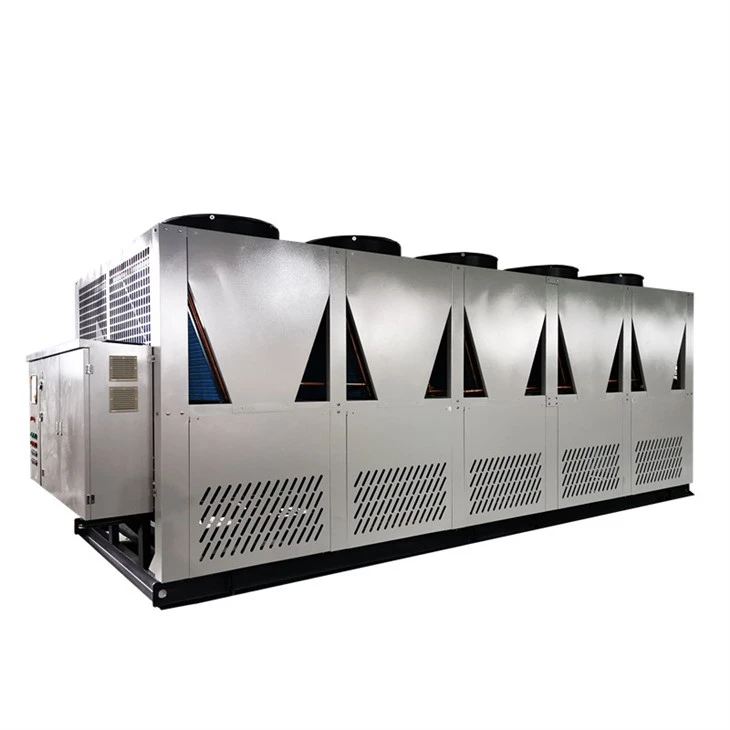
Air Cooled Screw Chiller
Why Choose Us?
Best After-Sales Service
We have a large number of professional after-sales service teams. Should you have any inquiries after receiving your shipment, feel free to reach out to us anytime.
Real Factory
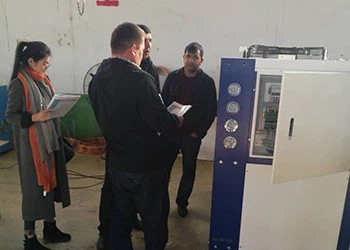
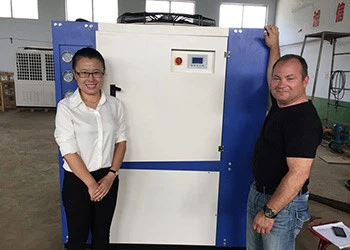
Our company has more than 5,000 square meters of production plants and more than 200 employees engaged in product production, research and development and after-sales service
Rich Experience
We have 17 years of manufacturing experience and have provided professional solutions to many customers.
OEM & ODM Capabilities
We offer customized services, tailoring products to your specific requirements.
What is Air Cooled Screw Chiller?
An air cooled screw chiller is an advanced cooling system extensively used in commercial and industrial applications to remove extra heat and offer HVAC purposes. It dehumidifies air and helps maintain an optimum temperature in restaurants, manufacturing plants, corporate sectors, large buildings, etc. Air cooled screw chillerer comprises a simple infrastructure with a compact assembly. Therefore, it is easy to install and remove. Also, the cooling is long-lasting and efficient for many years after installation.

Advantages of Air Cooled Screw Chiller
Occupy Very Less Space for Installation of Plant
The air cooled screw chiller works on screw compressors and usually requires very less space to install them in commercial and residential buildings. The compressor is the major bulk unit and they have very less electronic control boxes. The pipes and the main transporter of water and they do occupy very less space than the duct as in air conditioner.
Cools Efficiently According to Building Capacity
The air cooled screw chiller is most efficient to function according to the building capacity and never over cools your internal environment or internal building space. The source of coolant is the water and it has more efficiency to cool then the air.
Energy Efficiency
When you use air cooled screw chillers, they are energy efficient than any other technology in refrigeration/heating/cooling plants. Since, they can control the level of optimal cooling and never over cools according to a building capacity.They consume less energy to function due to the compressor type and its mechanism.
Emit Very Less noise while Functioning
The water is the main source inside the air cooled screw chiller compressor. The water present inside the compressor totally reduces the vibration effects of the plant. This is a natural mechanic and the functioning of screw chiller does not generate much noise within the short run or long run functioning. The motor and screw do function with less noise such that the compressor noise will not come outside of the plant, where it is installed.
Less Maintenance Works
The air cooled screw chiller compressor has very less spare parts and may function for the long run efficiently.‘Both’ the mechanical side there is very less maintenance and you may call the service provider for a regular chiller checkup.
Excellent for High-rise Building
When comes to HVAC, the high-rise building which may be for commercial or residential purpose always think about cooling efficiency and energy saving with reliability of a chiller. The screw chiller is the excellent cooling system to install in high-rise building to use the optimum of water based cooling. The use of pipe saves your building space and it is perfect for connecting entire building.
The Best Compressor for Long-run
When you install the air cooled screw chiller, you can use them for the long run without any disturbance. The screw compressor works efficiently and never become troublesome while functioning for long time.You can alter the size and capacity if necessary and avail the service from your chiller manufacture to assemble and install for you.
What are the Necessary Components of an Air Cooled Screw Chiller?
The compressor provides the driving force that moves the refrigerant through the system. The different types of compressors are screw, reciprocating, scroll, rotary, and centrifugal with centrifugal compressors being the most dynamic and unlike the four other types that use positive displacement as their working principle.
The condenser is a heat exchanger that transfers heat from the refrigerant to the air and is cooled by air. Air cooled condensers consist of tubes made of copper, running liquid refrigerant, and aluminum fins that serve in the transfer of heat with the passing air. The condensers in air cooled industrial chillers are air cooled, evaporative condensers, or water cooled condensers. In air cooled condensers, the function of the air is to serve as a cooling agent that distills the refrigerant.
These fans are what differentiate air cooled industrial chillers from water cooled industrial chillers. Their purpose is to move air across the condenser. As they move air across the condenser, unwanted heat is removed from the system, and the cycle starts all over again.
The expansion valve controls the flow of refrigerant from the condenser and varies the flow based on cooling load changes. It receives the refrigerant in a filtered liquid state and reduces the pressure on the refrigerant before it is sprayed into the evaporator. The restriction caused by the expansion valve makes the refrigerant backup and expand into a low pressure liquid and vapor mix. As the pressure builds, the liquid refrigerant transforms into a hot gas and then a cold gas.
In the evaporator, heat is extracted from the refrigerant before it enters the condenser. The evaporator is a heat exchanger that transfers heat from refrigerant to water or coolant . The various forms of evaporators are coil, shell and tube, and plate. The efficiency of the heat transfer is an essential function of an air cooled industrial chiller, with high efficiency being measured by an evaporators ability to transfer more energy using less heat exchanger area.
The purpose of this component is to protect the chiller by the removal of unwanted contaminants and moisture from the system. They need to be replaced regularly as they get clogged after repeated use.
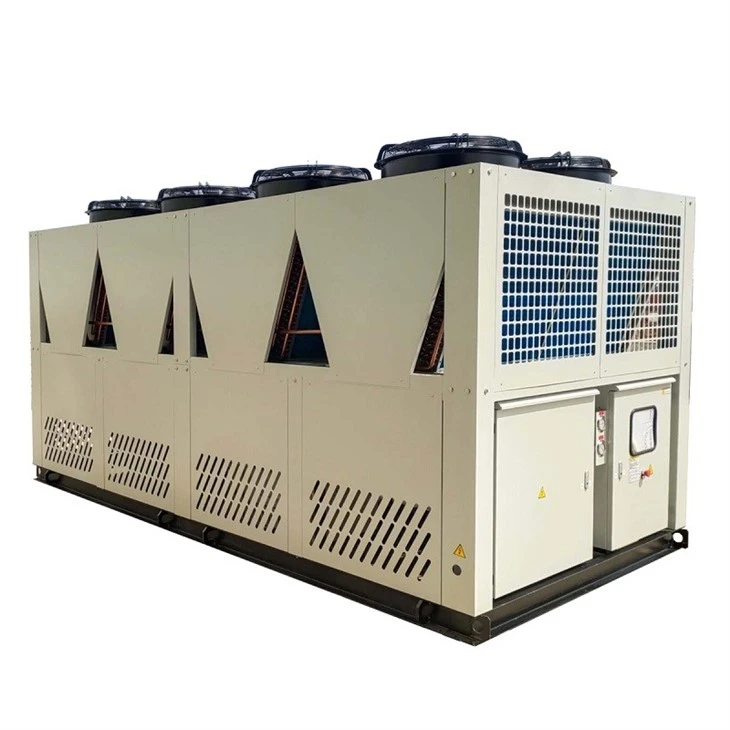
The working principle of air cooled industrial chillers is based on the absorption of heat from processed water. Once the air handler system uses up the water, it becomes warm and is returned to the chiller. The chiller's evaporator is utilized to transfer heat away from the water. A low-pressure gas is created by the evaporation of liquid refrigerant over the evaporator tube. Next, the refrigerant that has been evaporated travels to the compressor. At the compressor, low-pressure gas is compressed into high-pressure gas.
The gas will then leave and travel to the air cooled condensers. While inside the condenser, heat is removed from the chiller by blowing out the heat to the outside through the fans located on the side of the condenser. It is ideal if the chiller is placed outdoors or in a large indoor location. This is so because the heat is blown outside the chiller, and the excess heat effect is reduced.
The refrigerant turns into a high-pressure liquid soon after the gas leaves the condenser. The high-pressure liquid then flows to the evaporator via the expansion valve. As this process takes place, the refrigerant changes from a high-pressure liquid to a low-pressure liquid. Since an industrial air cooled chiller's working principle is also based on a continuous cycle, this low-pressure liquid will then be transferred back to the evaporator. At the evaporator, the whole cycle repeats itself.
Air cooled chillers are a type of refrigeration system that use a fan to force air over the coils in the chiller.
The water cooled chillers on the other hand, use a pump to circulate water over the coils.
The big difference between water cooled chillers and air chiller these two types of systems is that water cooled chiller can be more efficient but they also cost more and need more maintenance.
Both types of water cooled chiller and air chillers require basic maintenance to ensure that the system operates optimally.
Air chillers require less maintenance, though, as compared to the water cooled chillers. In terms of components, water cooled chiller need cooling towers or water pumps.
Some of water cooled chiller disadvantages include increased costs to maintain, increased maintenance costs due to breakdowns, and water cooled chiller not being effective when there is power outage.
In addition, air cooled chillers consume up to 10% more power to operate than the water cooled chillers.
What is the Difference Between a Water Cooled Chiller and an Air Cooled Chiller?
Water Usage
Air Cooled Chiller does not require a cooling tower, water reservoir, or a constant water supply. It uses ambient air rather than moist air for the transfer of heat.
Compressor
Most commonly, an air-cooled type uses a screw or scroll compressor, whereas, for a water-cooled type, a centrifugal or screw compressor is preferred.
Pump
The unwanted heat in the air-cooled system is ejected by using fans which drive the chilled air across the condenser.
A water cooled chiller uses water flow from the cooling tower through a sealed condenser to transfer heat.
Power Consumption
As a wet surface is more helpful for heat transfer, water cooled chillers use less power. An air-cooled type uses 10% more power but produces better heat transfer due to long-lasting results.
Space
An Air Cooled Chiller has an innovative and compact design and does not use much space. There is no cooling tower, extensive pipelines, and pumps that occupy much more space.
Its assembly is also simple, and you don’t have to spend an extra amount on the extensive pipe network.
Maintenance
It has a more solid impression, and since there are no cooling towers, the maintenance is less expensive and relatively simple.
Pricing and Affordability
The air cooled type is less expensive and quite affordable. The installation and maintenance also do not need any extra investment.
Factors to Consider When Choosing an Air Cooled Screw Chiller
Some considerations when choosing an air cooled chiller include:
Minimum Industrial Chiller Capacity
When opting for an air cooled industrial chiller, the environmental characteristics and the device's capacity must be considered. When there is a cold environment and a large temperature difference between day and night, air cooled chillers are preferred. However, in those cases, the capacity of the device, whether minimum or not, must be considered. When the appliances are of low capacity, it is ideal to use air cooled industrial chillers.
Effect of Industrial Chiller Height
The height of the surroundings is an important factor that must also be considered. Always pay attention to the height factor when purchasing an air-cooled chiller because the air cooled chiller capacity decreases as the altitude increases.
Industrial Chiller Control Type
When choosing an air cooled chiller, operators must consider how the chiller will be controlled. This is so because devices that can be easily controlled are more likely to promise more efficient work as well as performance.
Industrial Chiller and Refrigerant Pressure
Any type of industrial chiller must be protected against high pressure as much as possible, whether the water is cold or the air is cool. For this purpose, the quantity of air that flows in the condenser must be high. At the same time, medium and low-pressure refrigerants should be preferred.
Resistance to Air Temperature
In air cooled devices, the device’s remaining capacity is reduced by 1% for every 1°C. This is an important factor that will largely affect the choice when opting for an air cooled industrial chiller. This change also greatly affects the compressor and increases the amount of power that is used by the compressor by 1%.
Evaporator Pressure Drop Value
In air cooled industrial chillers, the pressure drop value of the evaporator must not exceed 60 kPa by a large amount. This must not occur in the air cooled industrial chillers that prefer the lowest pressure drop.
Physical Size of an Industrial Chiller
The size of the chiller is an important factor to consider. In the space of the building in which the chiller is going to be used, a small chiller must be chosen according to the available space. Usually, most air cooled chillers use little space.
The Amount of Noise Produced by the Device
The issue of the noise produced by the device during operation must also be considered. In places where noise is an important factor, categories of air cooled chillers with sound pressure less than 75dBA at a distance of 16.4ft (5 m) in an open space must be selected. There should be a preference for categories with low noise levels.
Number of Compressors
The number of compressors that an air cooled chiller contains is important. These are written in the specifications of the device.
What are the Components of the Control Unit of an Air Cooled Screw Chiller?
The control unit of an air cooled screw chiller consists of the following components:
Liquid Crystal Display
It shows all the operation information in the text. You can choose the language according to your convenience. It also shows the status of the system.
Indicators
The manual indicator lamp shows the state when the manual operation is possible. You can press the manual button for 1.5 seconds to turn it on.
Switch
The primary key to run or stop the chiller is the main switch. It needs to be pressed for 1.5 seconds or longer.
Alarm Lamp
It turns on whenever there is a caution warning or a system’s normal functioning problem. The message about the alarm is displayed on the LCD, which helps you locate the problem and take action accordingly.
Compressor Run/Stop Key
This key is functional only when more than one compressor is integrated into a system. There are two types of integrated systems: series and parallel.
What are the Installation Guidelines for your Air Cooled Screw Chiller?
You must know about the design of the base when installing your Air Cooled Chiller.
Before installing your chiller, it is recommended to consult with the architect of your building.
To minimize the transfer of vibrations during the working time, anti-vibration pads are utilized in a base casing which also reduces noise.
It requires a standard place to work, maintain and circulate air. If on cold days, snow gathers in an area, the following guidelines should be kept in mind:
Heighten the base more than possible snow level.
The base must be 1 meter greater than the maximum snow height.
The areas hyped with snow on cold days must not be used for the installation.
In monsoon regions, if the wind blows at a more incredible speed than the fan-blowing speed, it will damage the heat transfer system because air starts to move rapidly.
Install your chiller opposite to monsoon wind to prevent this damage from happening.
Water systems must be installed on routine installation rules to achieve outstanding results.
Cool water pipes must be washed bypassed and have a standard area for maintenance.
Pipelines are manufactured in parallel to prevent minimizing pump capabilities.
Electrolytic damage of pipelines can occur if your chiller connects with any electric apparatus.
Underground pipelines should be prevented from corrosion. To check any air gathering, seek water flowing speed, tank, and exhaust location.
The outer pipe of your chiller covered with a flexible tube and pump is necessary to reduce vibrations transmission.
A guard is suggested using the main power supply cable to keep dust away. Circuit breaker devices must be installed on each power supply cable to prevent electric damage.
The power breakers must have the following features:
Must possess an external operating processor.
Have a system to get locked when it’s in off mode.
Can stop conductors to its power supply circuit.
The maintenance tips and tricks for your air cooled screw chiller are as follows:
● All the inlets and outlets of water shall be checked for any leakage.
● See if any part of the system is being corroded due to the corrosive effects of water-containing salts and other chemicals.
● All the cooling coils shall be cleaned regularly to prevent any accumulation of dirt and debris, which creates a blockage.
● See if there are any twisted fins or leakages in the coils.
● Check the level of the refrigerant and charge it sufficiently whenever required.
● See if any additional vibration or sound is coming from the functioning chiller.
● Regularly check the oil level to ensure sufficient lubrication.
● Use techniques to check the leakage of the refrigerant or the oil.
● The condenser coils tend to grease up and therefore must be checked for any damage or blockage.
● All the electrical connections must be checked to ensure no wiring defect.
● Examine the filter drier regularly to see if it is not clogged up or obstructed. Change it if necessary to allow maximum flow.
● If any component is not working correctly, you must change it not to affect the overall efficiency.
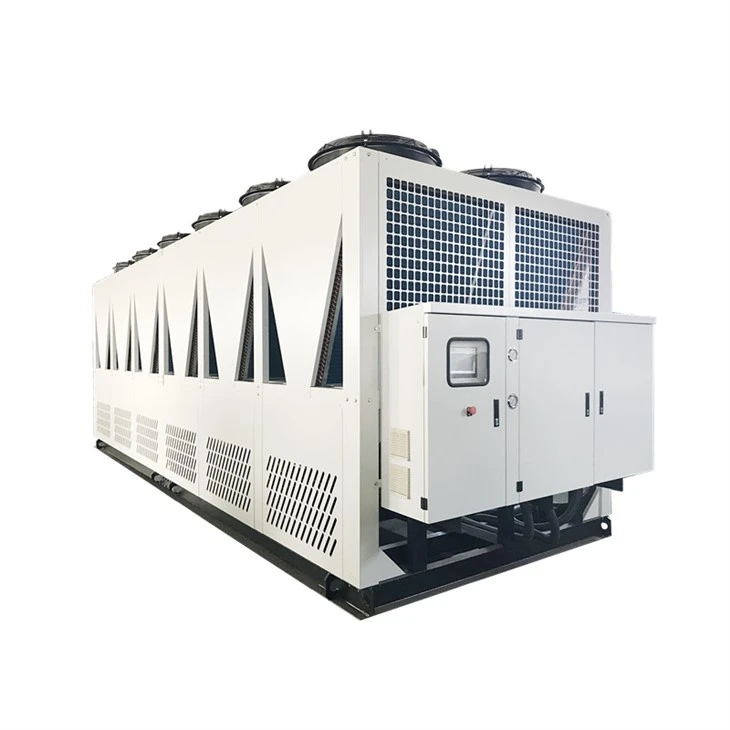
How to Enhance the Working Efficiency of your Air Cooled Screw Chiller?
To enhance the working efficiency of your air cooled screw chiller, follow the given steps:
● Always check the insurance and certification of the chiller before purchasing it.
● Factory testing and approval is the most crucial step.
● The chiller capacity must be by the cooling load of the application.
● The maintenance routine shall be followed appropriately, and the functional shall be assessed after regular intervals. It can be done if you keep a record of the maintenance.
● Pay attention to the quality of the refrigerant.
● Check the refrigerant and oil levels at regular intervals.
● The maintenance of a stable electricity connection is essential. Otherwise, any chiller won’t be able to produce the best results.
Our Factory
Jinan Mgreenbelt Machinery Co., Ltd. are core enterprises of MGREENBELT compressed air system products and services chain. We specialize in producing High Pressure Oil Free Compressor, Oil Free Air Compressor, Medium Pressure Screw Air Compressor, Screw Type Air Compressor, PET High Pressure Air Compressor, and other Air Compressor.