

Hey there! As a supplier of industrial chillers, I often get asked about the ins and outs of these machines. One of the most crucial components of an industrial chiller is the compressor. So, let's dive into what the compressor in an industrial chiller is all about.
What's a Compressor in an Industrial Chiller?
In simple terms, a compressor is like the heart of an industrial chiller. It plays a vital role in the refrigeration cycle, which is the process that allows the chiller to cool down the stuff it's meant to. You know how your fridge at home keeps your food cold? Well, an industrial chiller does something similar, but on a much larger scale. And the compressor is what makes it all happen.
The main job of the compressor is to take in low-pressure refrigerant gas, squeeze it (that's the compression part), and turn it into high-pressure gas. This change in pressure and temperature is super important because it kicks off the whole refrigeration process.
Think of it this way: when you squeeze a gas, it gets hotter. The compressor does just that to the refrigerant. Once the refrigerant is in a high-pressure, high-temperature state, it moves on to the next part of the chiller, where it can release that heat and start the cooling process.
Types of Compressors in Industrial Chillers
There are a few different types of compressors used in industrial chillers, and each has its own pros and cons.
Reciprocating Compressors
These are like the old-school workhorses of the compressor world. They use pistons that move back and forth (reciprocate) inside cylinders to compress the refrigerant gas. Reciprocating compressors are pretty reliable and can handle a wide range of refrigerants. They're also good for smaller industrial chillers or applications where you need a lot of control over the compression process.
However, they do have some downsides. They can be a bit noisy, and they require more maintenance compared to some other types of compressors. But if you're looking for a compressor that can do the job in a smaller setup, a reciprocating compressor might be the way to go.
Rotary Screw Compressors
Rotary screw compressors are becoming more and more popular in industrial chillers. They work by using two helical rotors that mesh together to compress the refrigerant gas. These compressors are known for being efficient and quiet. They can handle a large volume of refrigerant, which makes them great for bigger industrial chillers.
One of the big advantages of rotary screw compressors is that they have fewer moving parts compared to reciprocating compressors. That means less wear and tear and less maintenance. They're also pretty good at handling variable loads, which is important in many industrial applications.
Centrifugal Compressors
Centrifugal compressors are the heavyweights of the compressor world. They use a high-speed impeller to throw the refrigerant gas outward, creating a centrifugal force that compresses the gas. These compressors are super efficient and can handle really large volumes of refrigerant. They're often used in big industrial plants and commercial buildings.
The downside of centrifugal compressors is that they're more expensive to buy and install. They also need a pretty stable load to work at their best. But if you have a large-scale cooling need, a centrifugal compressor might be worth the investment.
Why the Compressor Matters
The compressor is so important because it directly affects the performance and efficiency of the industrial chiller. A good compressor can make the chiller run smoothly, use less energy, and last longer. On the other hand, a bad or poorly maintained compressor can lead to all sorts of problems.
For example, if the compressor isn't working properly, the chiller might not be able to cool down the stuff it's supposed to. That could mean a lot of wasted energy as the chiller keeps running but doesn't achieve the desired temperature. It could also lead to breakdowns and costly repairs.
So, when you're looking for an industrial chiller, it's really important to pay attention to the type and quality of the compressor. You want a compressor that's reliable, efficient, and suitable for your specific cooling needs.
Our Industrial Chillers and Compressors
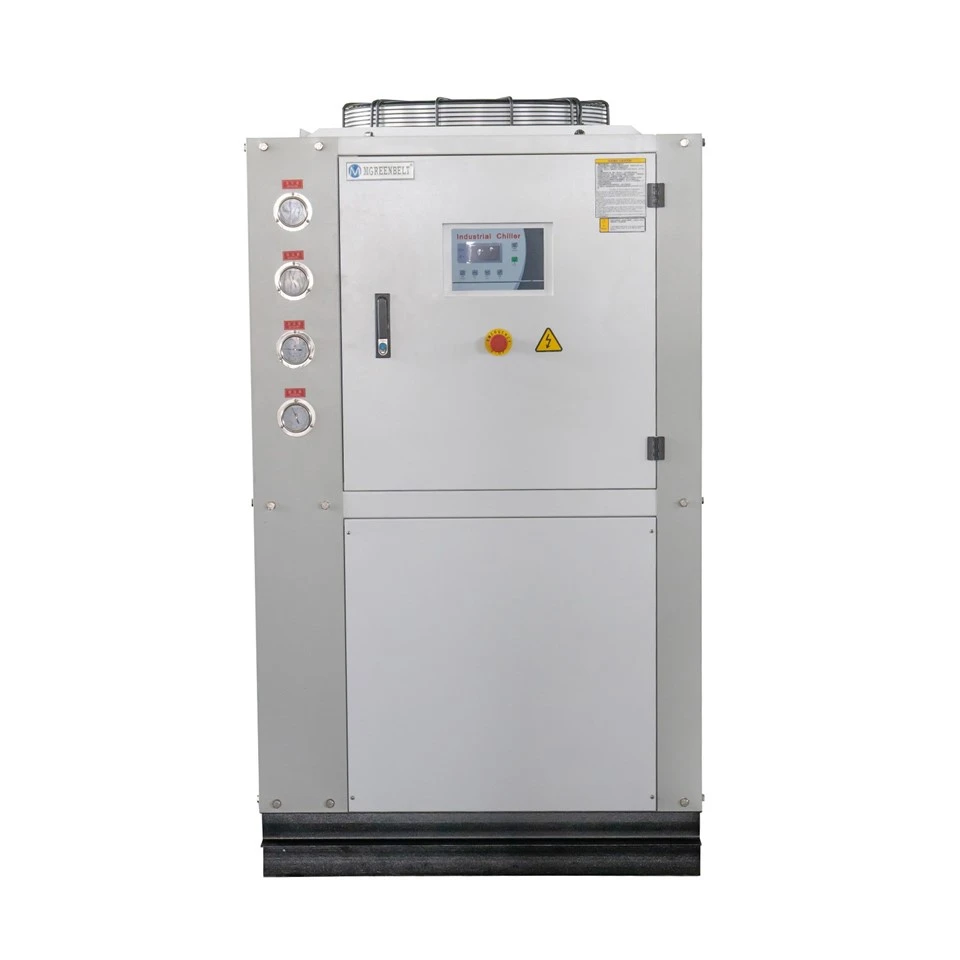
At our company, we offer a wide range of industrial chillers with different types of compressors to meet the needs of our customers. Whether you're looking for a small, compact chiller for a specific application or a large-scale chiller for an industrial plant, we've got you covered.
For example, our -10℃ To 30℃ Temperature Control Compact Design Chiller Water System With Titanium Heat Exchanger is a great option if you need precise temperature control in a small space. It's equipped with a high-quality compressor that ensures efficient and reliable operation.
If you're in the vacuum coating industry, our Chiller For Vacuum Coating Machine Cooling is designed specifically to meet the cooling needs of vacuum coating machines. It uses a compressor that can handle the unique requirements of this application, such as rapid temperature changes and high precision.
And for larger-scale vacuum coating operations, our 20Ton Chiller For Vacuum Coating is a powerful solution. It's equipped with a compressor that can handle the high demand for cooling in a 20-ton capacity chiller.
Conclusion
So, there you have it - a quick rundown of what the compressor in an industrial chiller is and why it's so important. The compressor is the heart of the chiller, and choosing the right one can make a big difference in the performance and efficiency of your cooling system.
If you're in the market for an industrial chiller, don't hesitate to reach out to us. We've got the expertise and the products to help you find the perfect chiller for your needs. Whether you have questions about compressors or want to discuss your specific cooling requirements, we're here to help. Let's start a conversation and see how we can work together to get you the best industrial chiller solution.

References
- ASHRAE Handbook - Refrigeration. American Society of Heating, Refrigerating and Air-Conditioning Engineers.
- Industrial Refrigeration Systems: Principles and Practice. Author: R. C. Downing.


