

Hey there! As an industrial chiller supplier, I often get asked about how the condenser in an industrial chiller transfers heat. It's a pretty cool topic (pun intended), and I'm excited to break it down for you.
First off, let's talk about what a condenser is and why it's so important in an industrial chiller. In simple terms, a condenser is a heat exchanger that plays a crucial role in the refrigeration cycle. Its main job is to remove heat from the refrigerant gas, turning it back into a liquid so that the cycle can continue.
So, how does it actually transfer heat? Well, there are a few different methods, but the most common ones are air-cooled and water-cooled condensers.
Air-Cooled Condensers
Air-cooled condensers are, as the name suggests, cooled by air. They're a popular choice for many industrial applications because they're relatively simple and don't require a separate water source.
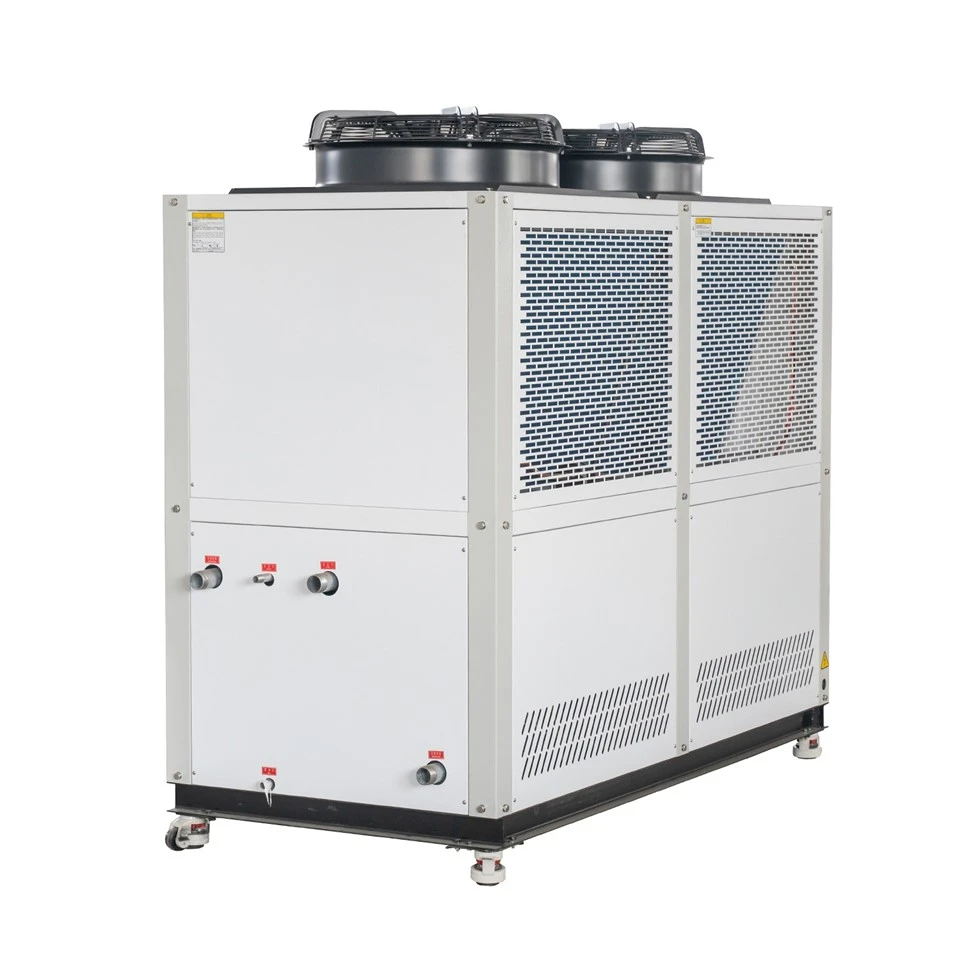
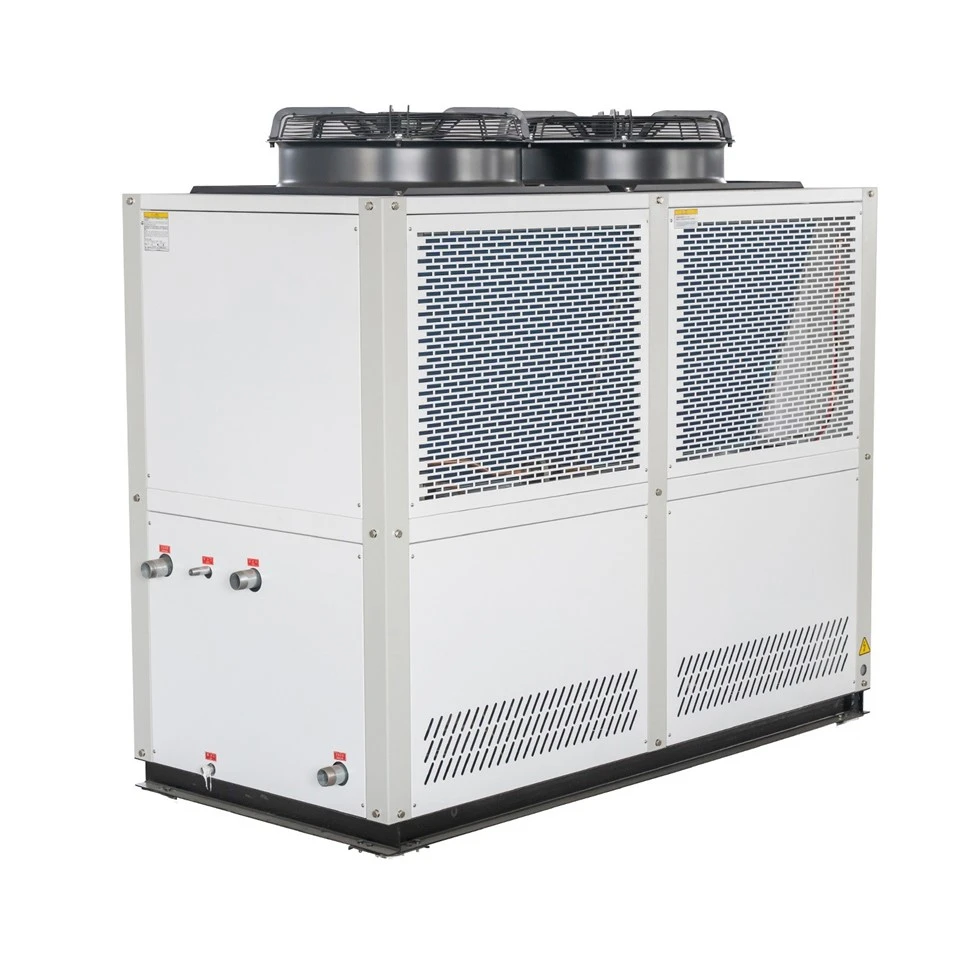
Here's how they work: The hot refrigerant gas from the compressor enters the condenser coils. These coils are usually made of copper or aluminum, which are great conductors of heat. As the refrigerant flows through the coils, a fan blows air over them. The air absorbs the heat from the refrigerant, causing it to cool down and condense back into a liquid.
One of the advantages of air-cooled condensers is that they're easy to install and maintain. They also don't have the risk of water leaks or water-related corrosion. However, they can be less efficient than water-cooled condensers, especially in hot climates. This is because the temperature of the air can limit how much heat the condenser can transfer.
If you're interested in an air-cooled industrial chiller, check out our CE Certificate Low Noise Portable Ice Rink Air Cooled Industrial Screw Water Chiller. It's a great option for applications where space is limited and noise needs to be kept to a minimum.
Water-Cooled Condensers
Water-cooled condensers, on the other hand, use water to remove heat from the refrigerant. They're generally more efficient than air-cooled condensers, especially in large industrial applications where high cooling capacities are required.
The process starts when the hot refrigerant gas enters the condenser. Inside the condenser, the refrigerant flows through a series of tubes, while water flows around the outside of the tubes. The water absorbs the heat from the refrigerant, causing it to condense. The warm water is then sent to a cooling tower or other heat rejection device to be cooled down before it's recirculated back to the condenser.
One of the main advantages of water-cooled condensers is their high efficiency. They can transfer a large amount of heat in a relatively small space, making them ideal for industrial settings. However, they do require a reliable water source and a cooling tower or other heat rejection system, which can add to the initial cost and complexity of the installation.
For applications like vacuum coating machine cooling, our Chiller For Vacuum Coating Machine Cooling with a water-cooled condenser is a great choice. It provides precise temperature control and high cooling capacity to ensure the optimal performance of your vacuum coating equipment.
Heat Transfer Principles
Now, let's dive a little deeper into the science behind heat transfer in condensers. There are three main mechanisms of heat transfer: conduction, convection, and radiation.
- Conduction: This is the transfer of heat through a solid material. In a condenser, conduction occurs when the heat from the refrigerant is transferred through the walls of the condenser tubes to the cooling medium (air or water). The rate of conduction depends on the thermal conductivity of the materials involved and the temperature difference between the refrigerant and the cooling medium.
- Convection: Convection is the transfer of heat through the movement of a fluid (liquid or gas). In an air-cooled condenser, the fan creates forced convection by blowing air over the condenser coils. In a water-cooled condenser, the water is circulated around the tubes, creating natural or forced convection depending on the design.
- Radiation: Radiation is the transfer of heat through electromagnetic waves. While radiation plays a relatively small role in condenser heat transfer compared to conduction and convection, it can still contribute to the overall heat transfer process, especially at high temperatures.
Factors Affecting Heat Transfer
There are several factors that can affect the efficiency of heat transfer in a condenser. These include:
- Temperature Difference: The greater the temperature difference between the refrigerant and the cooling medium, the faster the heat transfer rate. This is why condensers work more efficiently in cooler environments.
- Surface Area: A larger surface area allows for more contact between the refrigerant and the cooling medium, increasing the heat transfer rate. That's why condenser coils are often designed with fins to increase the surface area.
- Flow Rate: The flow rate of the cooling medium (air or water) also affects heat transfer. A higher flow rate can increase the convective heat transfer coefficient, resulting in more efficient heat transfer.
- Fouling: Over time, dirt, debris, and other contaminants can accumulate on the condenser coils, reducing the heat transfer efficiency. Regular maintenance, including cleaning the coils, is essential to keep the condenser operating at peak performance.
Our 20Ton Chiller For Vacuum Coating
If you're in the market for a high-capacity chiller for vacuum coating applications, take a look at our 20Ton Chiller For Vacuum Coating. It's designed with a high-efficiency condenser to ensure reliable and precise cooling for your vacuum coating processes.
In conclusion, the condenser is a vital component of an industrial chiller, responsible for transferring heat from the refrigerant to the environment. Whether you choose an air-cooled or water-cooled condenser depends on your specific application, budget, and operating conditions.
If you have any questions about our industrial chillers or need help choosing the right condenser for your needs, don't hesitate to reach out. We're here to assist you with all your cooling requirements. Let's start a conversation and find the perfect solution for your business!
References
- Incropera, F. P., DeWitt, D. P., Bergman, T. L., & Lavine, A. S. (2007). Fundamentals of Heat and Mass Transfer. Wiley.
- ASHRAE Handbook - Refrigeration (2014). American Society of Heating, Refrigerating and Air-Conditioning Engineers.


