

Hey there! As a supplier of cold room doors, I often get asked about the standard size of these doors. It's a pretty common question, and rightfully so, because getting the right size is crucial for the proper functioning and efficiency of a cold room.
First off, let's talk about why the size matters. A cold room is designed to maintain a specific temperature, usually for storing perishable goods like food, pharmaceuticals, or other temperature - sensitive items. If the door is too big or too small, it can lead to air leakage. This means that the cold air inside the room can escape, and warm air from the outside can seep in. As a result, the cooling system has to work harder to maintain the desired temperature, which can increase energy consumption and costs.
Now, there isn't a one - size - fits - all answer when it comes to the standard size of a cold room door. It depends on a few factors. One of the main factors is the size of the cold room itself. Larger cold rooms usually require bigger doors to allow for easy access and the movement of large equipment or pallets of goods. For smaller cold rooms, a smaller door might be sufficient.
Another factor is the type of goods that will be stored in the cold room and how they will be moved in and out. If you're dealing with large, bulky items, you'll need a wider door. For example, if you're storing large crates of fruits and vegetables, a narrow door might make it difficult to load and unload the goods efficiently.
Let's start with some common sizes. A typical width for a cold room door can range from about 800 mm (around 31.5 inches) to 2000 mm (around 78.7 inches). The height usually varies from 2000 mm (around 78.7 inches) to 2500 mm (around 98.4 inches).
For smaller cold rooms, like those used in small restaurants or cafes to store a limited amount of food, a door with a width of around 800 - 1000 mm and a height of 2000 mm is quite common. These sizes are sufficient for staff to easily access the stored items without taking up too much space.
In medium - sized cold rooms, such as those in grocery stores or small warehouses, a door width of 1200 - 1500 mm and a height of 2200 - 2300 mm is often used. This allows for the movement of standard pallets and larger containers.
For large cold rooms in industrial settings, like those used by big food processing companies or large - scale distributors, doors can be much wider, up to 2000 mm, and taller, up to 2500 mm. These large doors are necessary to accommodate the large - scale movement of goods and equipment.
It's also important to note that there are different types of cold room doors, and each type might have its own considerations when it comes to size.
One popular type is the Manual And Electric Sliding Doors. These doors are great because they don't require a lot of clearance space in front of the door to open. They slide horizontally, which is ideal for areas where space is limited. When it comes to size, sliding doors can be made to fit a wide range of widths and heights. However, the maximum width might be slightly more limited compared to other types of doors, especially if you're using a manual sliding mechanism. Electric sliding doors can usually handle larger sizes more easily.
Another common type is the Hinged Swing Door for Cold Room. These doors open like a regular door, swinging either inwards or outwards. They can be made in a variety of sizes, but you need to make sure there is enough space in front of or inside the cold room for the door to swing open fully. Hinged swing doors are often used in smaller to medium - sized cold rooms where there is enough space for the door to operate.
When choosing the size of a cold room door, it's also a good idea to think about future needs. If you plan to expand your business or increase the volume of goods you store, it might be wise to choose a slightly larger door than you currently need. This way, you won't have to replace the door later on when your requirements change.
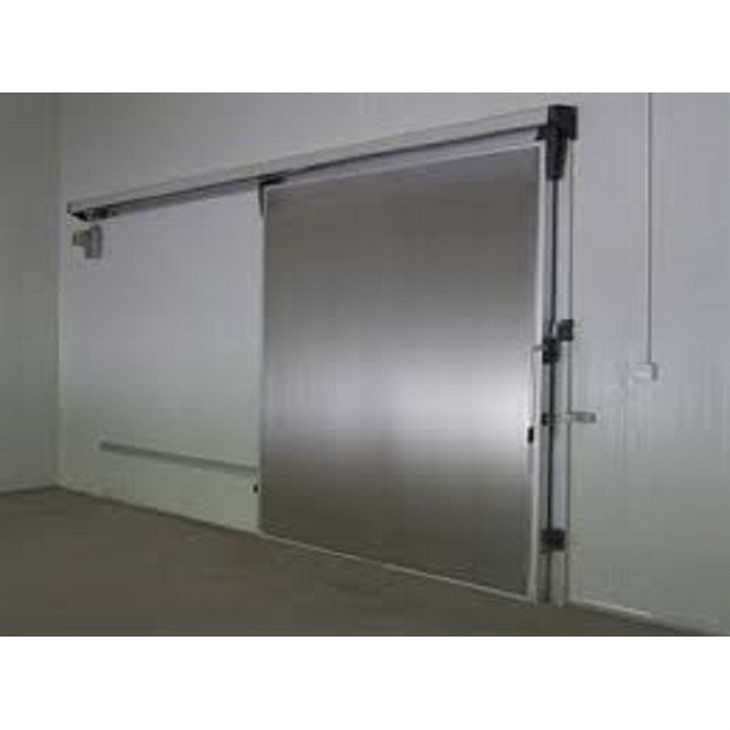

In addition to the width and height, the thickness of the door is also an important consideration. A thicker door generally provides better insulation, which helps to keep the cold air inside the room. Common door thicknesses range from 50 mm to 100 mm. Thicker doors are usually used in cold rooms that need to maintain extremely low temperatures.
So, as you can see, there's no single standard size for a cold room door. It all depends on your specific needs, the size of your cold room, the type of goods you're storing, and the type of door you choose.
If you're in the process of setting up a cold room or need to replace an existing door, I'd be more than happy to help you find the right size and type of door for your situation. Whether you need a small door for a cozy coffee shop or a large, heavy - duty door for an industrial cold room, we've got you covered.
Don't hesitate to reach out if you have any questions or want to discuss your requirements in more detail. We can work together to find the perfect cold room door solution for you.
References
- Cold Storage Handbook: A Guide to Design, Construction, and Operation of Cold Storage Facilities.
- Industry standards and guidelines for cold room equipment.


