

Hey there! As a supplier of Glycol Chillers, I often get asked about the maximum cooling capacity of these nifty machines. So, I thought I'd dive into this topic and share some insights with you all.
First off, let's understand what a glycol chiller is. A glycol chiller is a cooling system that uses a mixture of glycol and water as the cooling medium. Glycol has some great properties, like a lower freezing point than water, which makes it ideal for applications where the temperature needs to drop below the freezing point of water. These chillers are used in a wide range of industries, from food and beverage to pharmaceuticals and even in ice rinks.
Now, the maximum cooling capacity of a glycol chiller can vary quite a bit. It depends on several factors, and I'll break them down for you.
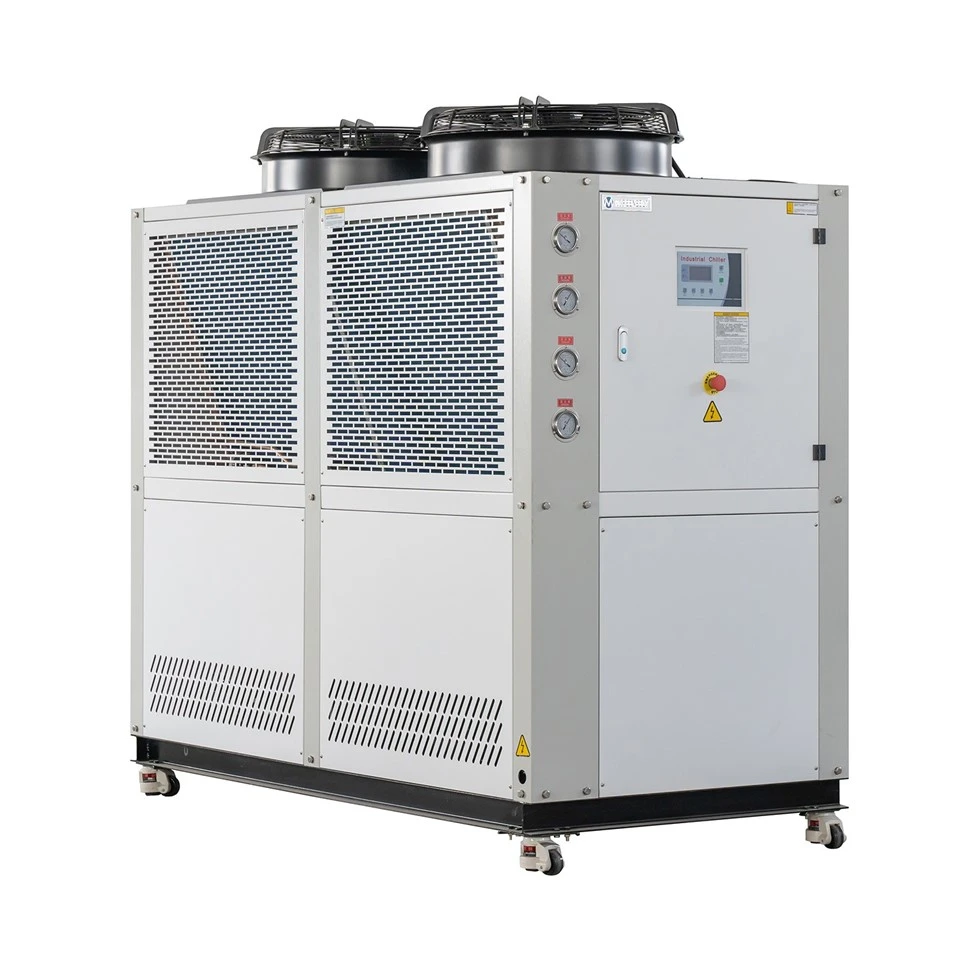

Factors Affecting Cooling Capacity
1. Compressor Size
The compressor is like the heart of the chiller. It's responsible for compressing the refrigerant gas, which is a crucial step in the cooling process. A larger compressor can handle more refrigerant and thus provide more cooling power. For example, a chiller with a big - capacity compressor can cool a large industrial space or a high - demand process. If you're looking for a high - capacity chiller, you might want to check out our 10 Ton Air Cooled Glycol Factory Price Air Cooling Chilling Water Chiller Equipment Machine. This bad boy has a powerful compressor that can handle a significant cooling load.
2. Heat Exchanger Design
The heat exchanger is where the heat transfer happens. There are different types of heat exchangers, like shell - and - tube and plate - type. A well - designed heat exchanger can transfer heat more efficiently, which means better cooling capacity. For instance, a plate - type heat exchanger has a large surface area for heat transfer, allowing it to cool the glycol - water mixture more effectively.
3. Refrigerant Type
The choice of refrigerant also plays a role. Different refrigerants have different heat - absorbing properties. Some refrigerants are more efficient at lower temperatures, while others work better in warmer environments. Manufacturers carefully select the refrigerant based on the intended application and the desired cooling capacity of the chiller.
4. Ambient Temperature
The temperature of the surrounding environment can have a big impact on the chiller's performance. In hot climates, the chiller has to work harder to reject heat. So, a chiller that has a certain cooling capacity in a mild climate might have a reduced capacity in a very hot area. This is something to keep in mind when choosing a chiller for your specific location.
Typical Cooling Capacity Ranges
Glycol chillers come in all shapes and sizes, with cooling capacities ranging from a few thousand BTUs (British Thermal Units) per hour to several million BTUs per hour.
-
Small - scale applications: For small labs or low - demand processes, you might find glycol chillers with cooling capacities in the range of 5,000 - 50,000 BTUs per hour. These are often used for cooling small equipment or for small - batch production. Our Plastic Water Chiller is a great option for such applications. It's compact and can provide reliable cooling for smaller setups.
-
Medium - scale applications: In medium - sized industrial facilities or commercial kitchens, chillers with capacities between 50,000 - 500,000 BTUs per hour are common. These can handle cooling for larger equipment, multiple workstations, or medium - sized storage areas.
-
Large - scale applications: For big industrial plants, ice rinks, or large - scale manufacturing processes, you'll need high - capacity chillers with cooling capacities of over 500,000 BTUs per hour. Our 7 Ton 10 Ton 30 Ton Lab Scale Ice Rink Industrial Air Cooled Brand Water Chiller is designed for these heavy - duty applications. It can provide the massive cooling power needed to keep large spaces or complex processes at the right temperature.
Calculating the Right Cooling Capacity
Figuring out the right cooling capacity for your needs is crucial. You don't want to over - or under - size the chiller. Here's a simple way to get a rough estimate:
- Determine the heat load: Calculate the amount of heat that needs to be removed. This includes heat generated by equipment, heat from the environment, and any other sources. You can use some basic formulas or consult with a professional if you're not sure.
- Consider future growth: If your business is likely to expand or your process requirements might change, it's a good idea to add some extra capacity to your chiller selection. This way, you won't have to replace the chiller in the near future.
Conclusion
So, there you have it! The maximum cooling capacity of a glycol chiller depends on a bunch of factors, and it can vary widely. Whether you need a small chiller for a lab or a huge one for an industrial plant, we've got options for you.
If you're in the market for a glycol chiller and want to discuss your specific needs, don't hesitate to reach out. We're here to help you find the perfect chiller for your application. Just let us know what you're looking for, and we'll work with you to get the right solution.
References
- ASHRAE Handbook - Refrigeration.
- Manufacturer's specifications for glycol chillers.


